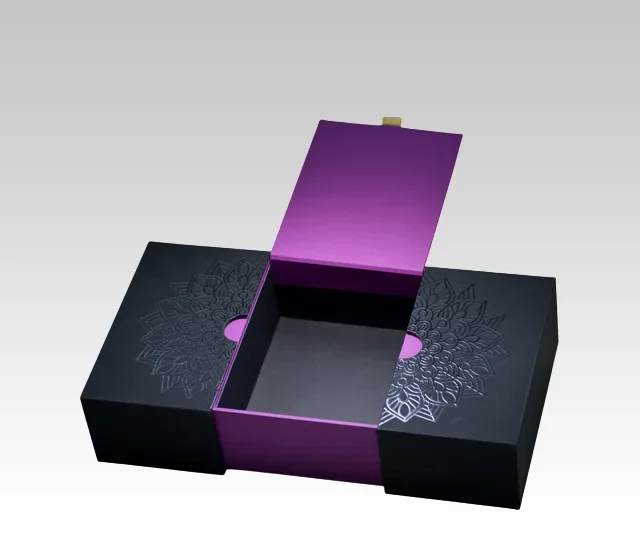
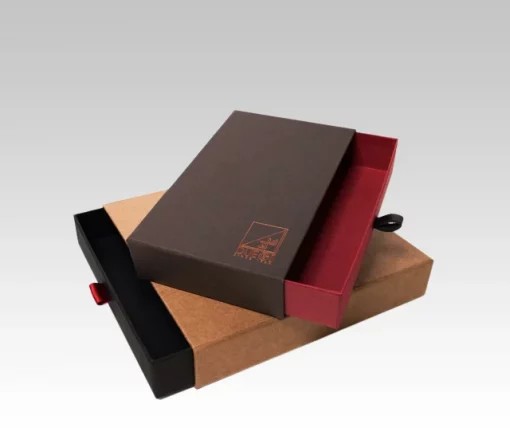

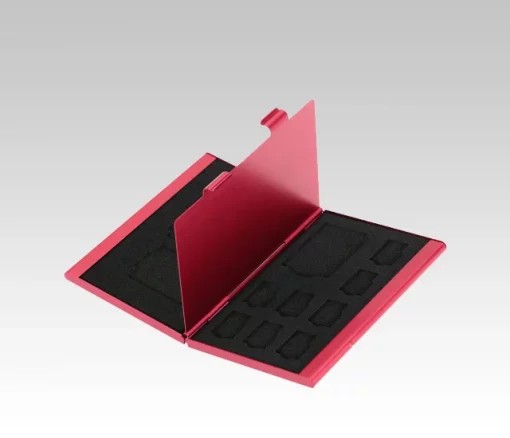
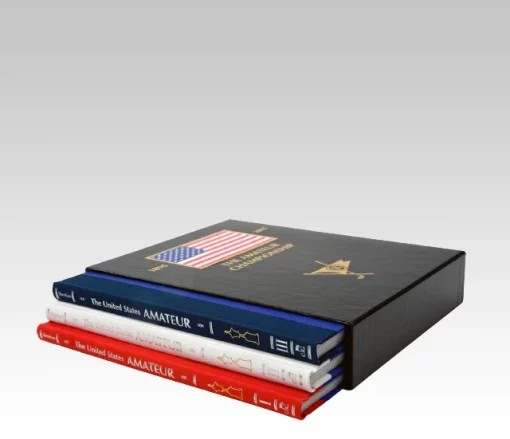
Slipcase boxes are open-ended rigid cases that a book, box set or record slides into, leaving the spine on show and the covers protected. Publishers, authors, record labels, stationery brands and agencies choose them for special editions and presentation pieces. Boxify Now makes custom printed slipcase boxes to the exact trim size and thickness of your volumes, wrapped in printed or textured paper. We supply wholesale slipcase boxes with low minimums for short runs. Add foil or embossing to slipcase boxes with logo artwork, and buy slipcase boxes with free design support. Buy now or request a quote.
Slipcase boxes are five-sided cases, open on one edge, that a book or other flat product slides into so that only its spine remains visible. They protect covers and corners from wear, keep multi-volume sets together and turn an ordinary edition into something collectible. Most are made from rigid chipboard wrapped in printed or textured paper.
Books are the obvious answer, but the format suits anything flat, valuable and meant to be kept. Common contents include:
The buyers are just as varied: trade publishers, university presses, self-published authors running a crowdfunded edition, record labels, photographers, stationery brands and marketing teams producing a presentation piece. Publishers who need a fully enclosed pack for mailing or gifting often pair a slipcase with one of our luxury book boxes.
The basic form of slipcase boxes is simple, and the variations come from how the contents are reached.
The standard style. One long edge is open, and the book sits with its spine flush with, or slightly proud of, the opening.
Half-moon cuts on the two large panels at the open edge let a reader grip the book and pull it out. Notches are close to essential for a snug single-volume case and for heavy books.
A wider case that holds two or more volumes side by side. The set reads as one object on a shelf, and the spines can carry a design that runs across all of them.
An inner tray or folder holds loose or irregular items, such as cards, prints or a record with inserts, and slides into the outer case like a drawer. If your contents are loose pieces instead of a bound book, sleeve boxes with a tray are worth comparing.
The open edge is cut on a diagonal, like a magazine file. It suits reference sets and catalogs that are pulled out often.
Measure the finished object, at its largest points, and measure more than one copy. A slipcase is unforgiving: a book that is slightly too thick will not go in, and one that is too thin will fall out.
If the book has not been printed yet, do not rely on a calculated spine width alone. Paper bulk varies, and a bound dummy from your printer on the actual stock is the most reliable reference. Send us the three dimensions and tell us whether they come from a finished copy or a specification.
Snug enough that the book stays put when the case is tilted, and loose enough that it slides out without force. We add a small clearance to your measurements to achieve that.
Too tight a fit causes real problems. The cover rubs every time the book is removed, dust jackets tear at the edges, and a close-fitting case can hold the book by suction. Too loose, and the book drops out when the case is picked up by its top.
Covers with soft-touch lamination, cloth or foil are more prone to rubbing, so say what the cover finish is. A paper or fabric-effect lining inside the case gives delicate covers a kinder surface to slide against.
Rigid chipboard is the standard structure for slipcase boxes. It holds its shape under the weight of a heavy book and gives the case square, clean edges. Board thickness is chosen to suit the load: a slim poetry volume needs less than a three-volume art set.
For lighter contents such as paperback sets or disc collections, a folded case made from heavy SBS paperboard is an economical alternative that ships flat.
The wrap sets the character of the case:
The interior can be left as plain board, lined in white, or lined in a color or pattern that shows when the book is drawn out.
Plan the artwork around how the case will be seen. In a bookstore or at an event, it is displayed face-out and the front panel does the selling. On a shelf at home, the book’s own spine faces outward and the case frames it, so the top edge and the narrow closed side deserve attention too.
Cases are printed in CMYK or PMS, outside and inside. Wraparound artwork can continue from the front panel across the closed edge to the back, and our design team will set the dieline so the image lines up at the folds.
Finishes that suit slipcases include matte lamination and soft-touch for a quiet, premium surface, foil stamping for titles and emblems, and embossing or debossing for a mark you can feel. Spot UV picks out a title or illustration against a matte ground. For music releases, the same approach used on album boxes works well: a restrained case outside and a full-color surprise inside.
Slipcases are made to the book, so every order is a custom size. We charge no die or plate fees for that, and low minimums fit the short runs typical of special editions and limited pressings. Free design support covers the dieline, wrap layout and notch placement.
Before production you receive a digital proof and a 3D mockup, which is the moment to check panel order and the direction the book enters the case. Shipping is free, and your quote will confirm delivery details for your location. Rigid slipcases arrive assembled, while folded paperboard cases ship flat.
We reply with a quote and a confirmed timeline, then send your proof for approval.
A good slipcase tells the reader that what is inside is worth protecting. If you have an edition, a set or a presentation that deserves one, buy now or request a quote and we will size printed slipcase boxes to fit it.
A slipcase is a five-sided case with one open edge. A book, set or record slides in so its spine stays visible. It protects the covers and corners, keeps volumes together and gives special editions a finished, collectible presentation.
Most are rigid chipboard wrapped in printed or textured paper, which keeps the case square under the weight of a hardcover. Lighter contents, such as paperback sets, can use a folded case made from heavy paperboard that ships flat.
Measure cover height, cover width from spine to fore edge, and thickness at the thickest point, with the dust jacket and any band in place. Measure two or three copies if you can, because bound books vary slightly.
We add a small allowance so the book slides without rubbing but does not fall out when tilted. The exact amount depends on the cover finish, weight and number of volumes, and it is shown on the dieline for your approval.
Yes, but accuracy matters. A calculated spine width is only an estimate. Ask your printer for a bound dummy on the real paper stock and measure that. Tell us the figures are from a dummy so tolerances can be set with care.
Yes. Multi-volume cases are sized to the combined thickness of the set, measured with the books standing together. Heavier sets need thicker board, and thumb notches or a slightly easier fit help readers remove a single volume.
Thumb notches are half-moon cuts at the open edge of the two large panels. They let you grip the spine and pull the book out without tipping the case. They are recommended for close-fitting cases and heavy volumes.
A correctly sized case should not, though soft-touch, cloth and foil covers mark more easily than gloss ones. Tell us the cover finish. A paper or fabric-effect lining and slightly more clearance reduce rubbing on delicate surfaces.
Yes. The interior can be printed in CMYK or PMS or lined with colored or patterned paper. Because the inside is glimpsed as the book is drawn out, a contrast lining is a simple way to add character.
Matte lamination and soft-touch are the most common base finishes. Foil stamping works well for titles and emblems, embossing and debossing add texture, and spot UV highlights artwork. Textured and cloth-effect wraps are usually left without lamination.
No. They are used for vinyl records, disc sets, planners, journals, albums, card decks, games and corporate presentation documents. Any flat item with consistent dimensions can be cased, sometimes with an inner tray to hold loose pieces.
Rigid chipboard slipcases are assembled when made and arrive ready to use. Folded paperboard versions ship flat and are put together by hand. Your quote will state which applies so you can plan storage and fulfillment.
Minimums are low, which suits limited editions, crowdfunded print runs and small presses. The starting quantity depends on construction and wrap, and it will be listed on your quote together with the options you asked about.
The timeline is confirmed on your quote and depends on the quantity, board, wrap and finishing. If the cases must meet books at a bindery or fulfillment house on a set date, tell us that date when you ask.
Supply artwork as a PDF, AI or EPS file at 300 DPI in CMYK. We send a digital proof and a 3D mockup showing each panel and the open edge. Production begins only after you approve them.