
Pick up a rigid box and you notice the weight and the square corners before you read a word on it. That first impression is why fragrance houses, electronics brands, jewelers and gift companies choose them. Boxify Now makes custom printed luxury rigid boxes in lift-off, magnetic, drawer, shoulder and collapsible styles, with wraps and inserts specified to your product. Order wholesale luxury rigid boxes for an ongoing line, or a short run with low minimums. Most brands finish their luxury rigid boxes with logo foil or debossing on the lid. Buy luxury rigid boxes now or request a quote.
Luxury rigid boxes are premium boxes made from thick chipboard that is wrapped in printed or specialty paper, so they hold their shape and do not fold flat like a carton. They are used for products where the packaging is part of the perceived value, such as fragrance, cosmetics, jewelry, electronics, spirits, apparel and corporate gifts. Many customers keep them long after the product is gone.
A box is rigid when its walls are built from dense chipboard, typically several times thicker than folding carton board, and fixed permanently at the corners. The board is cut and scored, the corners are stayed, and a printed or decorative sheet is glued over the outside and turned in over the edges. The print is on the wrap, not on the board itself.
This is why rigid boxes are also called set-up boxes: they are delivered already set up. It is also why they feel different. The walls do not flex, the edges are crisp, and the lid slides off slowly because air has to escape. That slow lift is a sign of a well-fitted box, not an accident.
Choose a rigid box when presentation and protection justify more material and handwork, and a folding carton when unit cost, storage space and speed of packing matter most.
Plenty of brands use both: a rigid box for gift sets and hero products, and printed folding boxes for refills and everyday items in the same range.
Most luxury rigid boxes fall into a handful of structures.
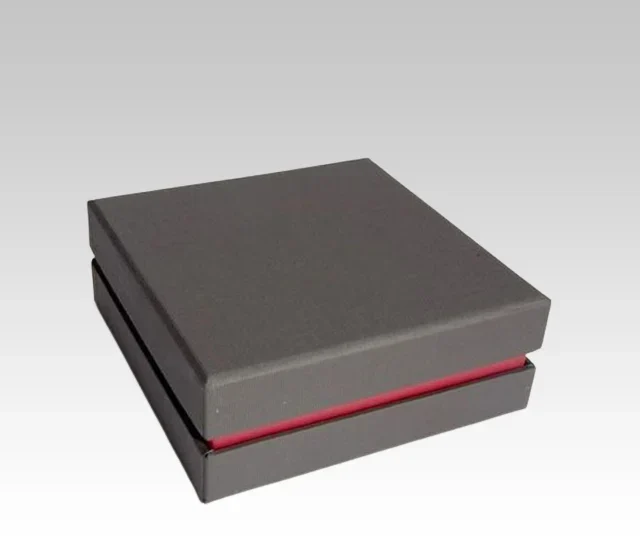
A base with a separate lid, either full depth or partial. It is the most familiar style, used for everything from phones to chocolates. If this is the style you have in mind, start with our two-piece rigid setup boxes.
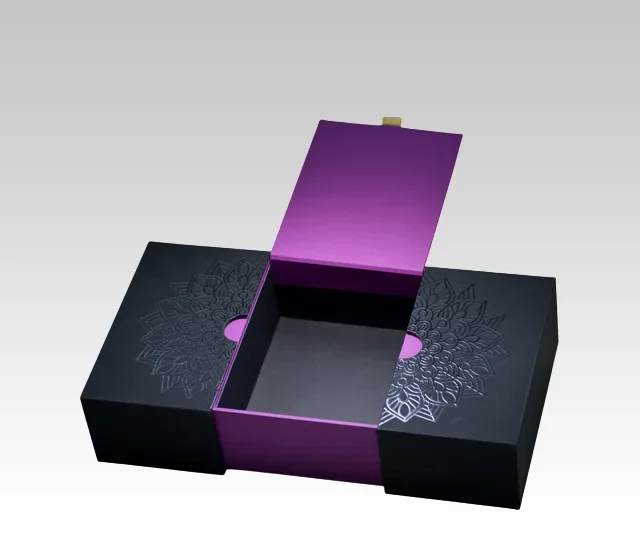
A one-piece box with a hinged flap that snaps shut on hidden magnets. It is popular for gift sets and subscription keepsakes.
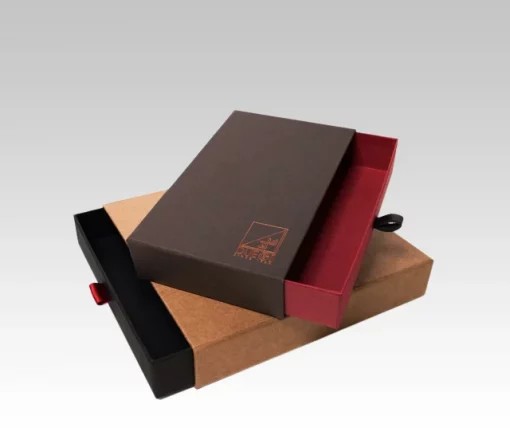
A tray inside an outer shell, opened with a ribbon or thumb notch. It suits jewelry, accessories and small electronics.
An inner collar holds the lid above the base and shows a band of contrast color. It gives the most precise fit and is common in watch and fragrance packaging.
A cover wraps around a tray and opens like a hardcover. It gives a large inside panel for a message.
Board thickness should follow the size of the box and the weight of the product. A small jewelry box holds its shape with a lighter chipboard. A large apparel or electronics box needs heavier board so the long walls do not bow and the lid does not dish in the middle.
Heavier is not always better. Very thick board on a small box makes the corners look bulky and reduces the usable interior. Tell us the product weight and the box dimensions, and we will recommend a board that gives a solid feel without wasted bulk.
The wrap decides how the box looks and feels, and there are three broad routes. Printed art paper, laminated in matte, gloss or soft-touch, reproduces any artwork in CMYK or PMS. Colored and textured specialty papers, such as linen, leather-grain and uncoated stocks, are dyed through and are usually decorated with foil or debossing instead of ink. Kraft wraps give a natural, understated result.
The inside deserves a decision too. A base wrapped in a contrast color, or an inner lid printed with a pattern, costs little and changes the opening completely.
Rigid boxes do not ship flat, so freight volume and warehouse space need planning before you order. If you expect to hold stock for months, measure the space you have against the cartons you will receive.
There are two ways to ease this. The first is a collapsible rigid box, which uses the same board and wrap but folds down flat and is assembled in seconds with magnets or adhesive strips. The second is nesting: in a size family, smaller boxes can sometimes be packed inside larger ones.
For direct-to-customer orders, do not send a wrapped rigid box through the mail unprotected. Put it inside a corrugated outer so corners and lamination arrive unmarked.
Usually yes, because a rigid box is rarely the exact shape of the product. Inserts hold the item in the center, stop movement and frame it when the lid comes off. The usual options are:
Give us the product dimensions, or send a sample, and we design the insert alongside the box so the two fit together.
The most effective rigid box designs use few elements. A single foil stamped logo on a soft-touch lid, or a blind deboss on a textured paper, often looks more expensive than full-coverage print. Available finishes are matte or gloss lamination, soft-touch, aqueous coating, spot UV, foil stamping, embossing and debossing, and we print on the inside as well as the outside.
Keep small type away from edges, where the wrap turns over the board. Large solid colors show scuffs more than textures do, so a lamination is advisable on dark printed wraps.
There are no die or plate charges, minimums are low and shipping is free.
Custom luxury rigid boxes take a little more planning than cartons, and the result shows it. Buy now or request a quote, and we will help you specify the right structure, board and wrap for your product.
It is a box made from thick chipboard wrapped in printed or specialty paper. It does not fold flat, keeps its shape under pressure and is used for premium products and gifts where the packaging contributes to the value of the item.
A carton is a single sheet of thin paperboard that folds flat. A rigid box has thick, permanent walls covered by a separate wrap. Rigid boxes are heavier, stronger and more often kept, while cartons cost less and store compactly.
Lift-off lids suit most products. Magnetic closures suit gift sets, drawers suit small accessories, and shoulder boxes give the most tailored fit. Tell us the product and how customers will receive it, and we will recommend a structure.
Yes. Every box is built from your inside dimensions, so the product and insert fit exactly. There are no die or plate charges, which means a custom size carries no tooling fee compared with choosing from a fixed list.
You can choose printed art paper with lamination, colored or textured specialty papers such as linen and leather-grain, or kraft. Printed wraps reproduce full artwork, while specialty papers are usually finished with foil stamping or debossing.
Yes. The base, inner lid and insert can each be wrapped or printed in a contrast color or pattern. We print inside as well as outside in CMYK or PMS, so the interior can carry artwork or a message.
We make die-cut foam, paperboard and card platforms, fabric-covered pads and dividers. Each is cut to your product so it sits centered and secure. Send dimensions or a sample and we will include the insert on your proof.
Standard rigid boxes ship assembled because their corners are fixed. If storage or freight volume is a concern, a collapsible rigid box offers the same look and folds flat until needed. We can quote either version.
They resist crushing well, but the wrap and corners can scuff in transit. For mail orders, place the rigid box inside a corrugated outer or mailer. We can size the outer to match so the fit is snug.
Soft-touch lamination with foil stamping is a very common pairing. Debossing on textured paper, spot UV on matte, and embossing for crests are also widely used. We can show alternatives on the 3D mockup before you decide.
Chipboard and paper wraps are paper-based and widely recyclable. Magnets, foam and fabric pads should be removed first. Recycling rules differ by area, so customers should check locally. Card inserts make the whole pack easier to recycle.
Minimums are low, so new brands and limited editions can use rigid packaging without committing to large stock. Include your target quantity in the quote request and we will confirm what is available for your style and size.
Rigid boxes involve wrapping and finishing steps that folding cartons do not, and timing varies with the specification. We confirm the timeline on your quote, so mention any launch date when you first get in touch.
Send PDF, AI or EPS files at 300 DPI in CMYK, with PMS colors noted and fonts outlined. Logos for foil or debossing must be vector. Our free design support can adapt existing artwork to the wrap layout.
Yes. A digital proof and a 3D mockup are supplied before production, showing artwork, finishes and the insert. We begin only when you approve, and our designers will make corrections if anything needs adjusting.