

Good food sold as a gift needs packaging that looks as carefully made as what is inside. Boxify Now supplies custom printed gourmet boxes to chocolatiers, bakeries, delis, caterers and gift basket companies, with dividers, liners and windows fitted to your assortment. Shops stocking up for the holidays can order gourmet boxes wholesale in several sizes from one design. Every order includes free design support, so producing gourmet boxes with logo foil, a printed interior or a seasonal sleeve is simple. Buy gourmet boxes that suit your food and your price point: order now or request a quote.
Gourmet boxes are printed gift and retail boxes made for specialty foods such as chocolates, baked goods, cheese and charcuterie selections, nuts, preserves and tea. They organize an assortment with dividers or trays, protect it in transit, and present it well enough to be given as a gift. Food makers, caterers and gift companies use them for both everyday sales and seasonal collections.
Almost any specialty food that is sold as a treat or a gift can go in one, and the contents decide the construction. The most common fillings are boxed chocolates and truffles, cookies, brownies and macarons, dried fruit and nuts, jarred sauces, honey and preserves, cured meats with crackers, coffee and tea, and mixed hampers that combine several of these.
Each behaves differently. Chocolate marks easily and needs cups or a tray. Baked goods release oil. Jars are heavy and knock together. A mixed hamper has items of five different heights. A good gourmet box starts with a list of what goes in and how much each piece weighs.
Buyers are mostly small and mid-sized food businesses that sell on quality instead of volume:
Corporate gifting is the fastest way a small producer ends up needing several hundred identical boxes at once, so it pays to have a design ready before the holiday inquiries arrive.
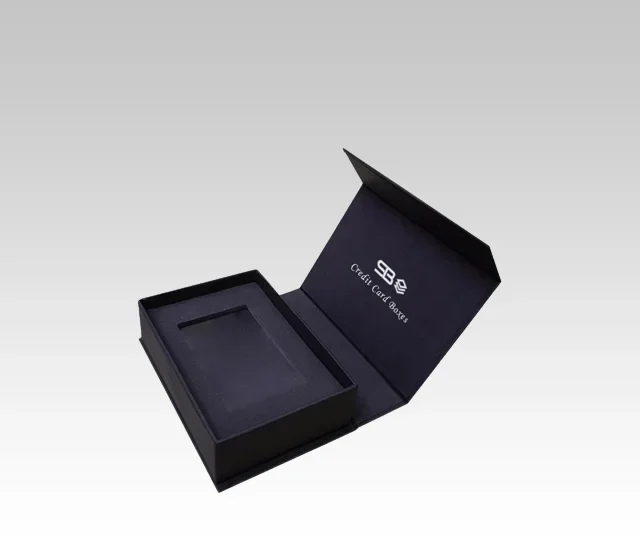
A two-piece rigid box with a lift-off lid and a cavity tray is the traditional chocolate box, and it still sells. Shallow depth, a cushion pad under the lid and a printed flavor guide finish it. Makers who want a lighter carton for everyday sales often move to folding chocolate boxes and keep the rigid version for gift collections.
Bakery items need headroom and airflow more than rigidity. A paperboard box with a tuck top or a window lid, a grease-resistant liner sheet and a divider for each row works for cookies and brownies. Macarons need a snug tray so the shells do not slide and crack.
When the box holds jars, bags and cartons together, strength comes first. A corrugated or rigid base with a custom divider gives each item its own cell. Magnetic closure boxes and drawer boxes are popular here because customers keep them. If your hampers are mostly gifted, compare these with our food gift boxes before you settle on a format.
Dividers stop items from touching and moving, and liners keep oil and crumbs away from the printed board. Together they are what separates a gourmet box from a plain carton.
Paperboard dividers slot together into a grid and fold flat for storage. Die-cut card inserts hold jars and tins by the neck or base. Cavity trays hold individual chocolates in rows. For anything oily or unwrapped, plan for a barrier between the food and the box: glassine or greaseproof sheets, paper candy cups, or individual wraps. Many makers add a sheet of custom tissue paper on top, which hides the contents until the last moment and gives one more place for a logo.
Tell us whether food will touch the box directly. It changes which board, coating and liner we suggest, and you remain responsible for confirming that your packaging choices meet the food rules that apply to your products.
Choose the board by weight and by how the box will travel.
Paper-based boxes are widely recyclable where food residue is not an issue, although local rules vary.
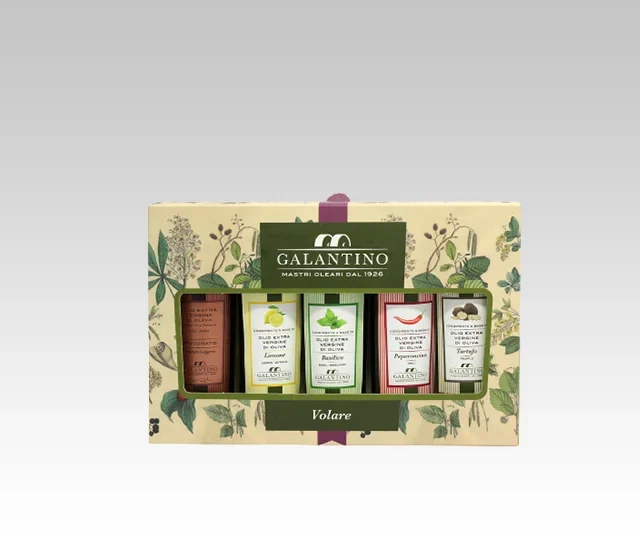
Yes, and for food it is often the most persuasive feature on the box. A die-cut window with a clear PET film lets the buyer see color, texture and freshness without opening the lid. Keep the window clear of the box edges so the lid stays stiff, and position it over the most attractive part of the layout, not over a divider wall.
Windows are less suited to chocolate that sits in sunlight or under warm display lighting, so chocolatiers often choose a solid lid with a printed photograph or a flavor map instead.
Printing is CMYK or PMS, outside and inside. Matte lamination and soft-touch give a calm, premium surface that makes foil stamping stand out, which is why they are common on chocolate and tea. Gloss lamination and aqueous coating wipe clean and resist fingerprints at a busy counter. Embossing and debossing add a crest or pattern without extra ink, and spot UV can pick out a logo on a matte lid.
For seasonal lines, consider one core box with a changeable printed sleeve or belly band. You hold a single stock of boxes and switch the sleeve for Valentine’s Day, Mother’s Day and the winter holidays.
We make custom gourmet boxes in the size, board and layout your assortment needs, with custom inserts and dividers and no die or plate charges. Free design support is included, and you approve a digital proof and 3D mockup before production. Folding styles ship flat to save storage space. Minimums are low, shipping is free, and your quote will confirm the timeline and delivery details for your location.
Send us your product list, quantities and artwork, and we will recommend a structure and price it. Buy now or request a quote to get your gourmet packaging started.
They are used for chocolates, truffles, cookies, macarons, brownies, nuts, dried fruit, tea, coffee, preserves, cheese and charcuterie sets, and mixed gift hampers. The structure, board and inserts are chosen to match the weight and fragility of what you pack.
Most makers place unwrapped or oily food on a greaseproof liner, in paper cups or in individual wraps instead of directly on printed board. Let us know your product and we will suggest a suitable liner and coating for your box.
Yes. We make custom paperboard grids, die-cut card inserts and cavity trays sized to your items. Send the dimensions of each product and the layout you have in mind, and we will draw the insert for you to approve.
Use E-flute corrugated or rigid chipboard with a fitted divider. Both resist crushing and keep glass from knocking together. Light SBS paperboard is better kept for cookies, tea and small confectionery assortments that weigh very little.
Yes. A die-cut window with clear PET film can be placed on the lid or front panel in almost any shape. We will check that its size and position leave enough board around the edges to keep the lid rigid.
It can. Many brands print a core box in their standard colors and add a seasonal sleeve or belly band. This keeps box stock simple while letting the presentation change for each holiday or limited collection.
We print in full-color CMYK and in PMS spot colors, on the outside and the inside of the box. PMS is useful when your brand color must match across boxes, sleeves and labels produced at different times.
You can choose matte or gloss lamination, soft-touch, aqueous coating, spot UV, foil stamping, embossing and debossing. Soft-touch with gold or copper foil is a frequent choice for confectionery, while gloss suits bright, playful bakery branding.
We can leave a clear panel on the base or back, or print the information directly if it will not change. For recipes that vary, an unprinted label area is more practical. You are responsible for the accuracy of food labeling content.
Minimums are low, so small producers can order a short run for a market season or a single corporate client. Tell us your quantity when you ask for a quote and we will confirm what is possible.
It depends on the structure, inserts and finishes. We confirm the timeline on your quote. If you are ordering for a holiday, tell us the date you need boxes in hand so we can advise before you place the order.
Yes. You receive a digital proof and a 3D mockup showing the artwork, window position and insert layout. Production begins only after you approve it, and changes at proof stage are part of our free design support.
Please send PDF, AI or EPS files at 300 DPI in CMYK. Include any PMS references and outline your fonts. If you only have a logo, our designers can build the full box layout from it at no cost.
Folding cartons and dividers ship flat and are assembled as you pack. Rigid boxes arrive set up. Shipping is free, and your quote will confirm delivery details for your location, including how the order will be packed.
A corrugated gourmet box can travel on its own if it is sized well. Paperboard and rigid gift boxes should go inside an outer shipping carton so corners, foil and lamination arrive clean. We can size the outer box to fit.