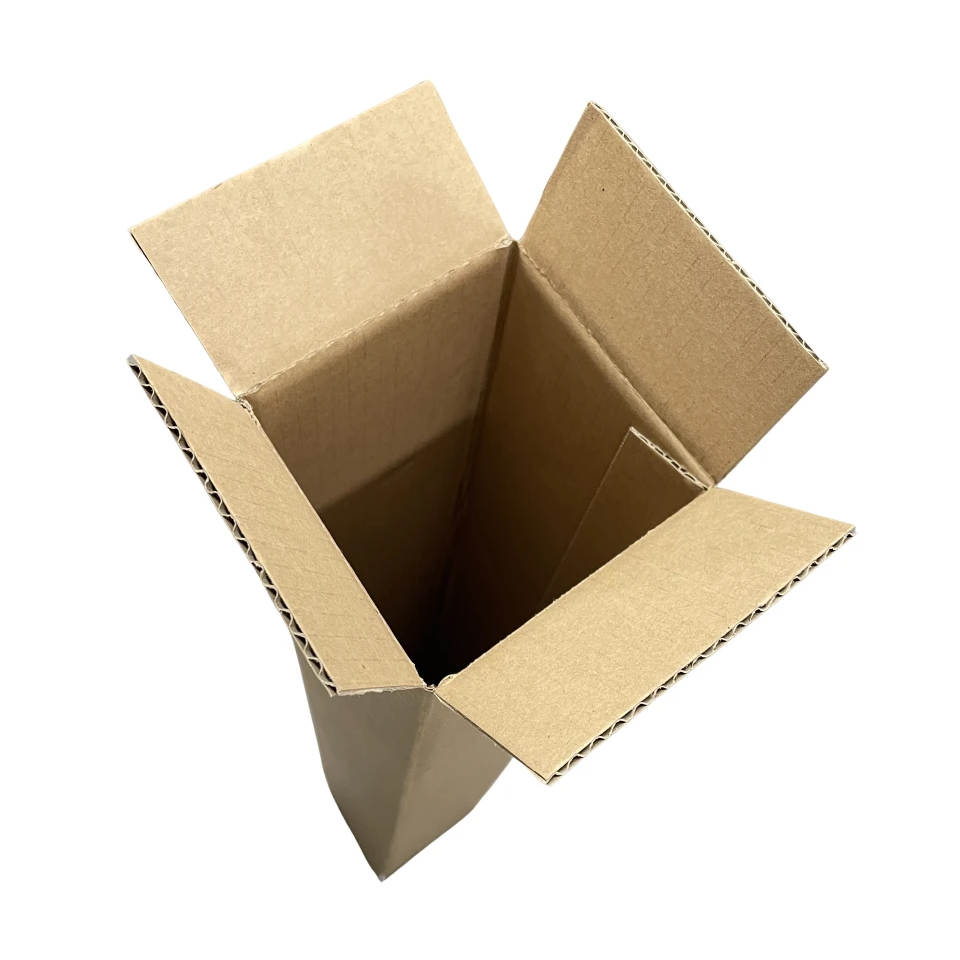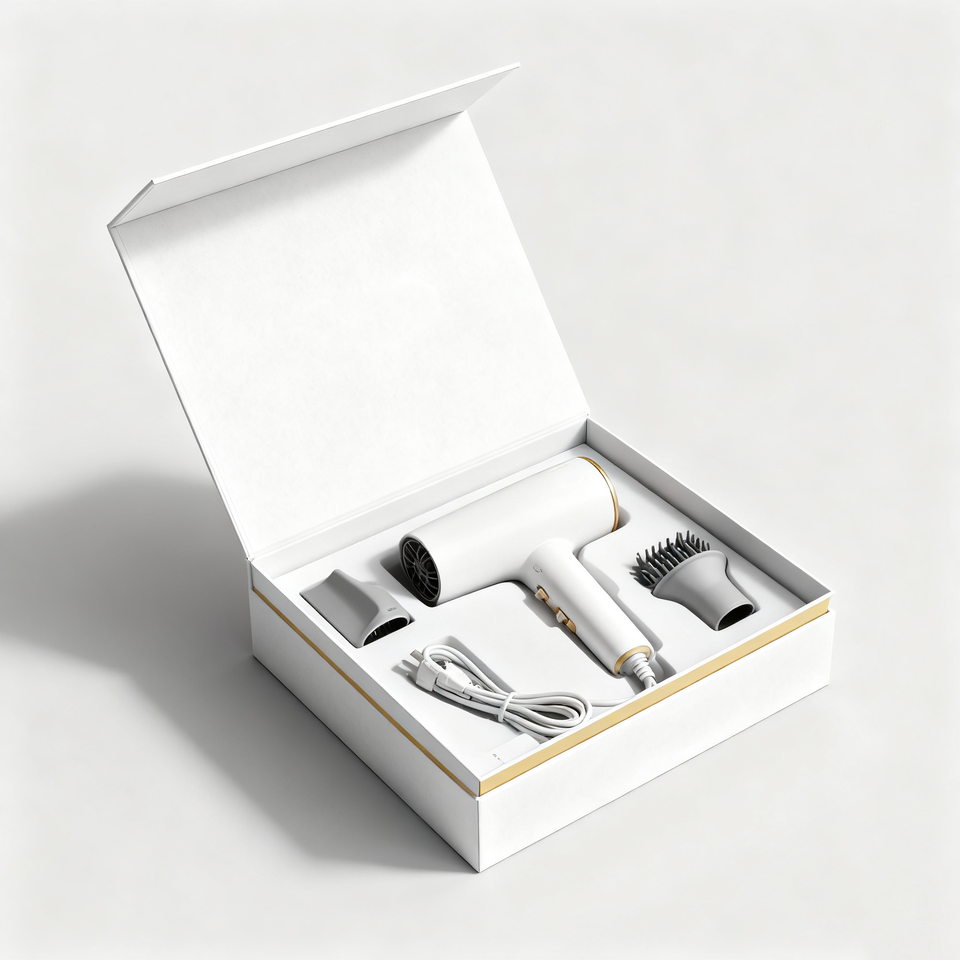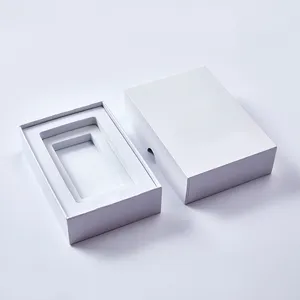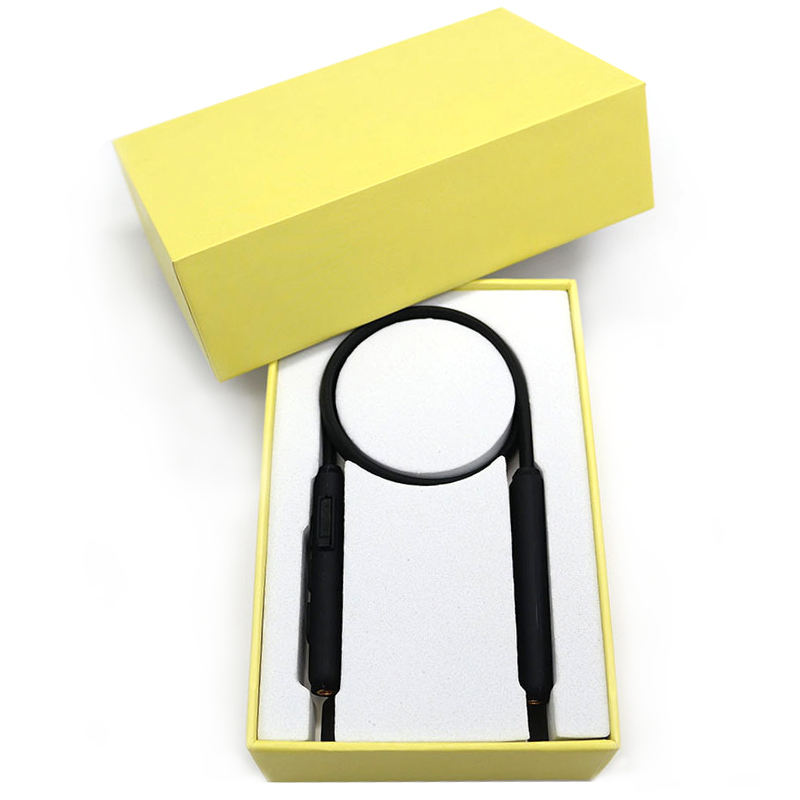
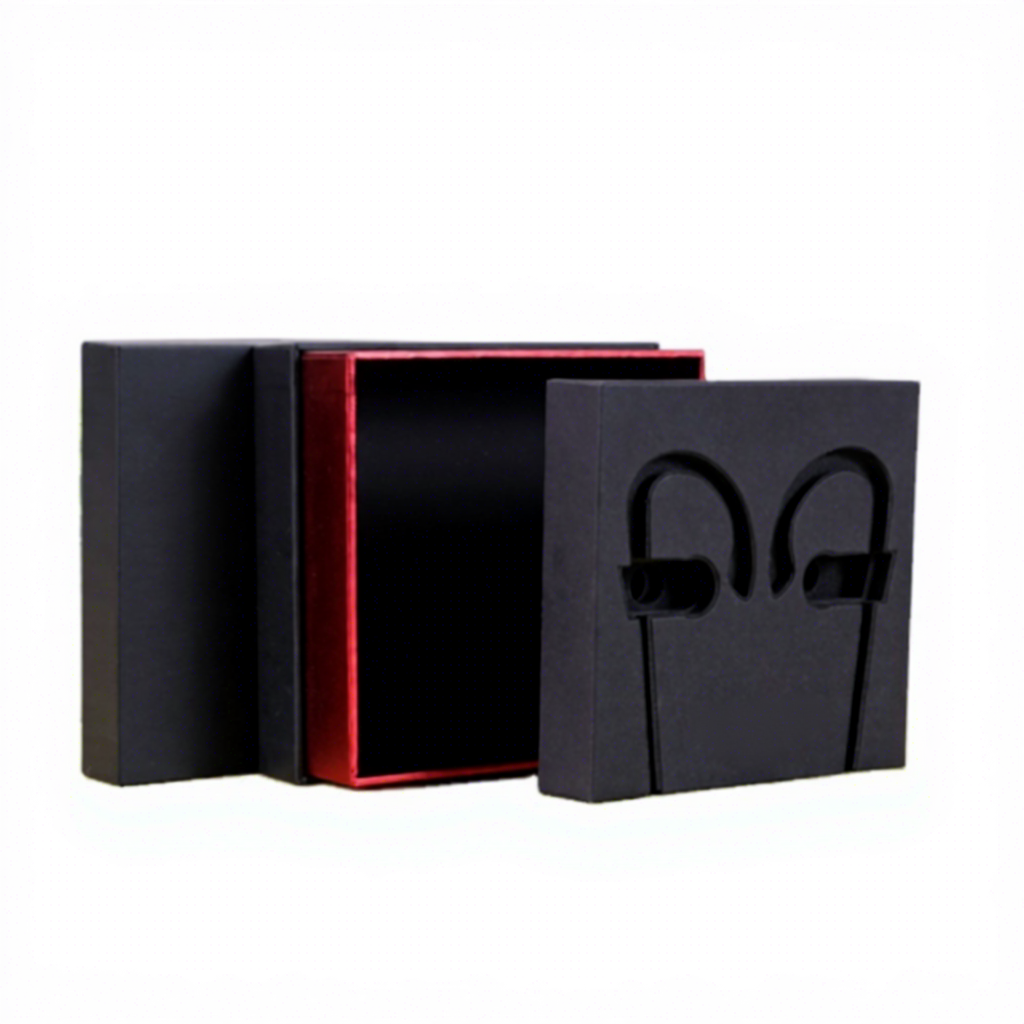
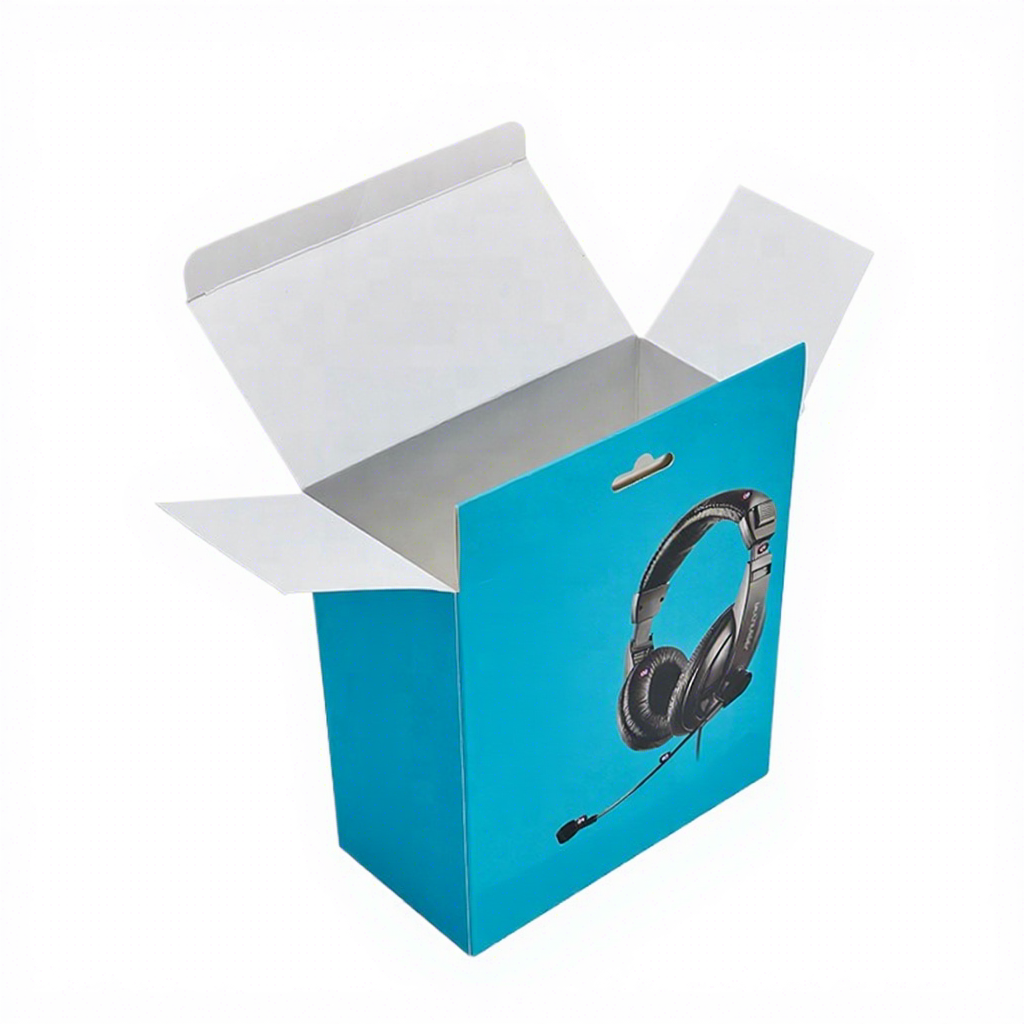
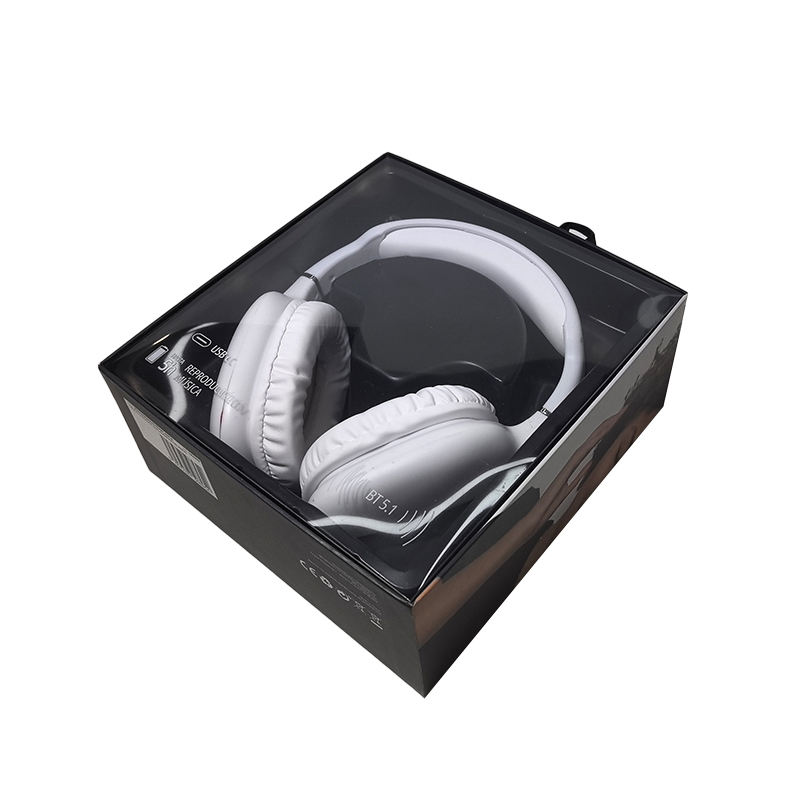
Whether you sell studio over-ears, wireless earbuds or gaming headsets, the box sets expectations before anyone hears a note. Headphone boxes from Boxify Now are built around the product, with cradles for ear cups, cavities for charging cases and a compartment for cables and ear tips. Audio brands, electronics retailers and promotional buyers can buy headphone boxes in rigid, sleeve and tray, drawer or hang tab styles. We make custom printed headphone boxes with your logo, product imagery and specifications, and supply headphone boxes wholesale for larger launches. Buy now or request a quote.
Headphone boxes are printed cartons or rigid boxes made to hold headphones, earbuds or headsets along with their cables, ear tips and charging cases. They protect delicate parts such as headbands and ear cushions, present the product for retail, and shape the unboxing. Styles range from simple hang tab cartons for wired earbuds to rigid boxes with fitted inserts for premium over-ear models.
The product type decides nearly everything about the box, so start there.
These are large and oddly shaped. They pack flat with the cups rotated, or folded if the hinge allows. The insert has to support the arch of the headband and must not squash the ear cushions, which can hold a dent after weeks under pressure. Expect a roughly square box in rigid board or corrugated.
Here the product is really the charging case: a small, dense object. It suits a compact box in rigid or heavy paperboard, with the case on a top platform and the cable, spare ear tips and leaflet beneath. A box this small needs good proportions and a little weight to feel worth the price.
Light and low in cost, these usually go in a hang tab carton with a window so the color is visible on the peg.
Bulky, often with a detachable microphone, these ship in larger corrugated cartons with bold graphics and a feature-heavy back panel.
Yes, more than for most electronics. Headphones are a personal purchase, they are often given as gifts, and they are filmed being opened more than almost any other gadget.
A good sequence is simple: an outer sleeve slides off, a lid lifts, and the product is the first thing seen. Cables and paperwork stay out of sight in a labeled accessory compartment. A short line of copy or a quick-start diagram inside the lid gives the customer something to read while they lift the headphones out, and a ribbon or thumb notch makes the tray easy to remove.
Keep it in proportion. A budget pair in an elaborate box sends the wrong signal, and the packaging cost should make sense against the retail price.
They are protected by an insert shaped to the product and by something soft against polished surfaces.
Foam is the classic insert for over-ear models. It can be cut precisely to the outline of the headband and cups and it cushions well. Die-cut paperboard and corrugated cradles are the paper-based alternative: a folded structure holds the headband from beneath and locates the cups, and it keeps the whole pack in one material stream.
A few details separate good headphone packaging from average. Give detachable cables their own compartment, because metal plugs scratch glossy cups. Cut a finger notch beside an earbud case so it can be lifted without tipping the box over. Wrap the cups or lay a sheet over them: printed custom tissue wrapping paper prevents rub marks and adds a layer to the reveal.
Send the product dimensions both unfolded and in the packed position, together with a list of accessories, and we will design the insert around them.
Restrained ones, as a rule. Matte or soft-touch lamination with spot UV over the product image is the familiar premium look, often with a foil stamped logo. Embossing or debossing on a rigid lid adds texture you notice in the hand. A solid black or brand-color interior, printed inside the box, frames the product well.
Gaming headsets go the other way: gloss lamination, saturated CMYK artwork and a bright PMS accent color. One caution on soft-touch: dark soft-touch surfaces show fingerprints, so matte lamination can be the safer choice for boxes that will be handled a lot in stores.
Printed headphone boxes that look right on a desk still have to work in a store. For peg display, a hang tab is added to the back panel and positioned so the pack hangs level. For earbuds, a die-cut window with clear PET window film lets shoppers see the color and the ear tip style, and our window boxes can be adapted to small formats. Over-ear headphones rarely get a window; a strong photograph does the job without weakening a large panel.
The back panel should carry the specifications people compare, such as connection type, battery life and compatibility, along with a contents list, the barcode and any marks you supply. If a retailer has given you size limits or shelf-ready requirements, share them before the dimensions are fixed.
Send us the product dimensions, the accessory list, the structure you prefer and the quantity. We reply with a quote that confirms the timeline. Free design support is included, so our team can prepare the dieline, plan the insert and place your artwork, and there are no die or plate charges. You approve the proof before anything is made. Minimums are low, folding styles ship flat where the structure allows, and shipping is free; your quote will confirm delivery details for your location.
Custom headphone boxes carry a lot of the first impression for an audio brand. Buy now or request a quote, and tell us what you are launching so we can match the structure to the product.
Premium models usually use rigid chipboard wrapped in printed paper. Mid-range and gaming products often use printed E-flute corrugated, and wired earbuds go in SBS paperboard cartons. Kraft board is an option for brands that want a natural, understated look.
A two-piece rigid box or a shoulder box is the usual choice, with an insert that supports the headband and locates the ear cups. A sleeve and tray or a printed corrugated box gives a similar reveal at a lower cost per unit.
A compact rigid or heavy paperboard box with a two-level insert works well. The charging case sits on a top platform, and the cable, spare ear tips and leaflet go underneath. Drawer boxes and small lift-off lid boxes are both popular.
Yes. Inserts are cut to your product in foam, paperboard or corrugated board, with separate cavities for the headphones, charging case, cables and ear tips. Give us the packed dimensions of each item and we will plan the layout.
Yes. A die-cut paperboard or corrugated cradle can support a headband and hold the ear cups in position. It keeps the whole pack in one material, and paper-based packaging is widely recyclable, although local rules vary from place to place.
Yes. A small inner carton or a covered section of the insert keeps cables, adapters, ear tips and paperwork together and out of sight. It also stops metal connectors from touching and scratching the headphones during shipping.
Both are available. A hang tab on the back panel suits earbuds sold from retail pegs, and a die-cut window with clear PET window film shows the product color. For large over-ear boxes, a printed photograph is usually the better option.
Yes. Gaming headsets are bulky, so they usually ship in printed corrugated cartons with an insert that holds the headset and a separate space for a detachable microphone and cables. Gloss finishes and bold artwork are common for this category.
A rigid box with a magnetic closure or a lift-off lid is sturdy enough to keep on a shelf, and many customers do. It is not a substitute for a travel case, but a fitted insert makes it a tidy home for the headphones.
Matte or soft-touch lamination with spot UV and a foil stamped logo is the most common combination for premium products. Embossing and debossing add texture to rigid lids. Gloss lamination suits brighter, more energetic designs such as gaming lines.
Yes. We print inside as well as outside in CMYK or PMS. A solid interior color, a short brand message or a quick-start diagram under the lid are all common, and they add to the unboxing without changing the structure.
Minimums are low, which makes custom packaging practical for a new audio brand or a limited edition. The quantities available depend on the structure, materials and finishes selected, and your quote will show the options side by side.
Your quote confirms the timeline, which depends on the box structure, quantity and finishing. Shipping is free, and the quote also confirms delivery details for your location. Work begins once you have approved the proof.
Yes. You receive a digital proof of the flat artwork and a 3D mockup showing the box as it will look assembled. Use it to check panel order, specifications and how the lid, sleeve or drawer lines up with the design.
PDF, AI or EPS files at 300 DPI in CMYK, with fonts outlined and PMS colors identified. Product renders or photographs should be high resolution. If you have only a logo and reference images, our designers can develop the layout with you.