
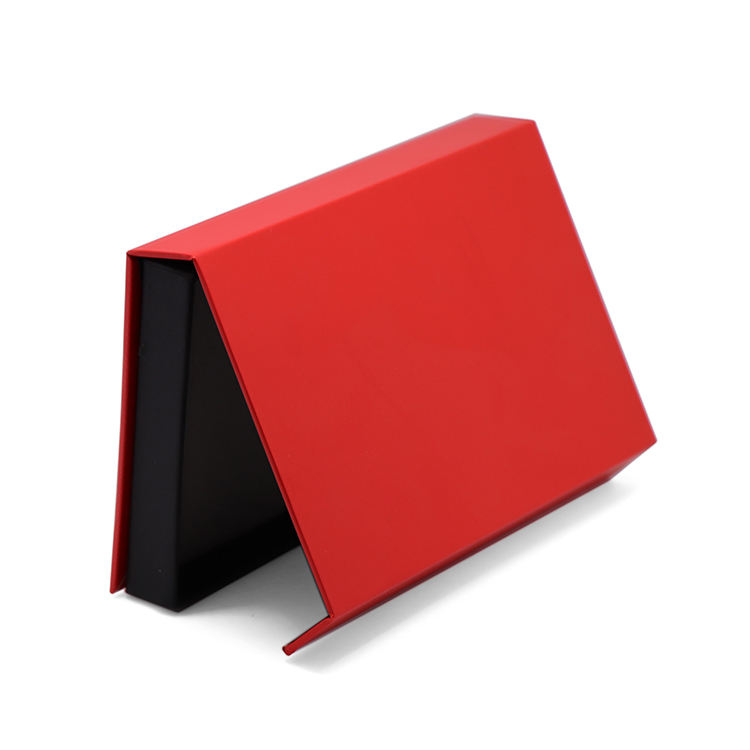
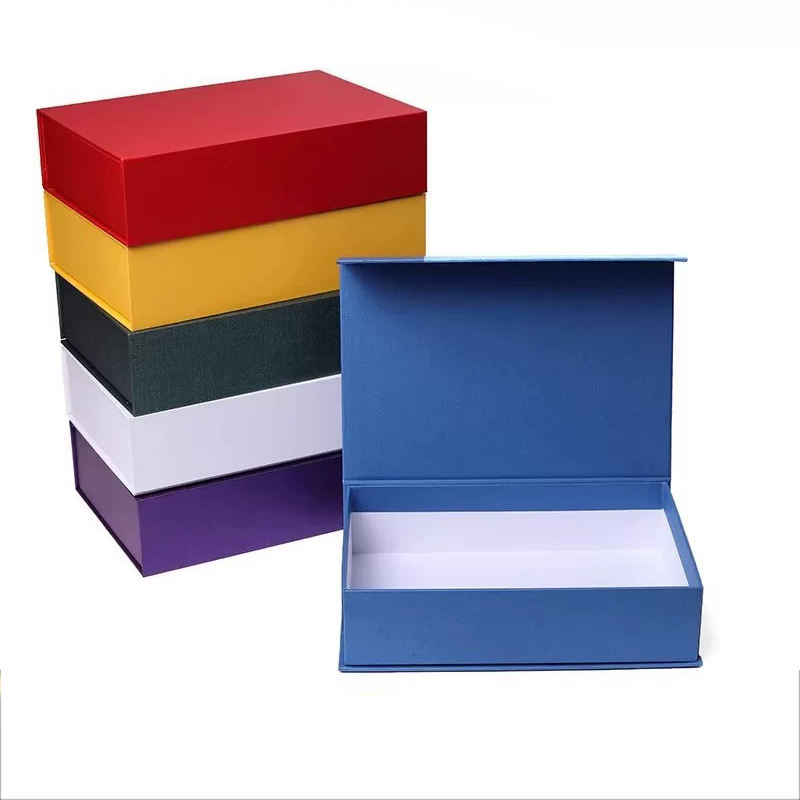
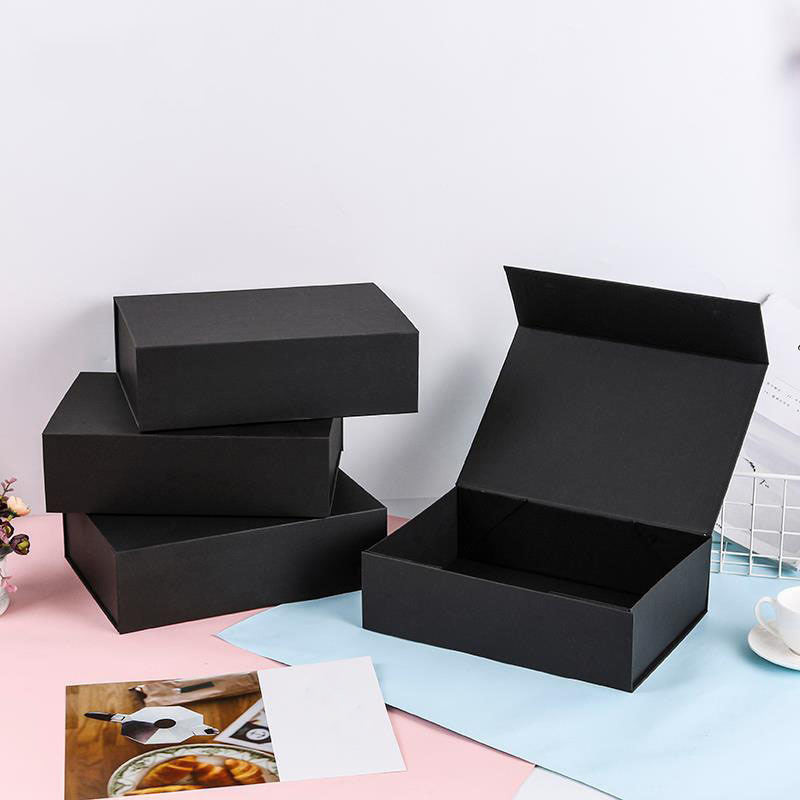
Bookend boxes open from the side like a hardcover book, giving DVDs, stationery sets and small collections a satisfying reveal on the shelf. Buy custom printed bookend boxes with your logo on the front cover, the spine and the inside panels, so every surface tells part of your story. We supply bookend boxes wholesale in custom sizes, with free design support, no die or plate charges and low minimums for first runs and reorders. Buy now or request a quote.
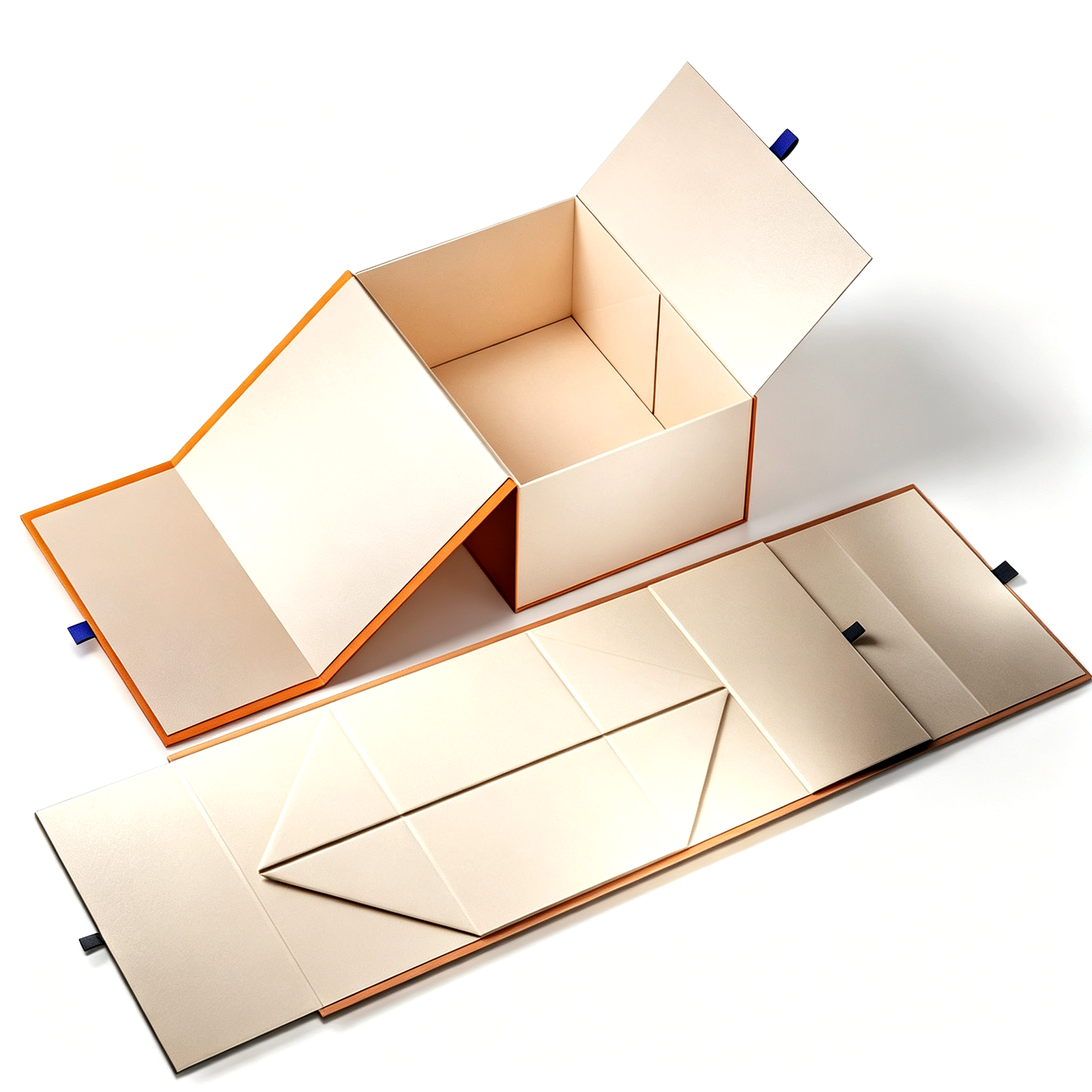
A bookend box is a folding carton shaped and hinged like a book: a front cover panel swings open from the side, a spine panel acts as the hinge, and the product sits in a shallow tray formed from the back panel. The carton is cut from one sheet of paperboard, scored at the spine and glued at the tray walls, so it ships flat and stands upright on a shelf with its spine facing out, just like a title in a bookcase.
Because the closure is a side-opening cover rather than a top tuck, custom bookend boxes feel closer to a keepsake than a carton. That is why media publishers, stationery brands and gift sellers use them for sets that customers keep after the first unboxing.
A bookend box opens by swinging the front cover sideways on its spine hinge, exactly like opening a paperback. The cover usually carries a tuck flap or a thumb-notch edge that slides behind the tray wall, holding the box shut during handling without any glue on the closure itself.
The spine is scored twice, which lets the cover wrap cleanly around the depth of the tray. On thicker sets we widen the spine panel so the cover sits flat instead of springing open. If you need a firmer hold, a small die-cut lock tab on the fore edge clicks into a matching slot, and many retailers add a printed belly band or sleeve over the outside for a sealed look.
Side opening keeps the product visible as one composed layout the moment the cover moves. Customers see the disc, the notebook or the card set framed by your inside print, rather than digging down into a deep tray. It also lets you stack bookend cartons spine-out on a shelf, which saves facing space and makes a series look like a collection.
Bookend packaging fits flat or shallow products that benefit from a presentation reveal and a shelf-friendly spine. Common uses include:
Media brands often pair a bookend outer with printed CD jackets inside, so each disc has its own sleeve while the set reads as one boxed edition.
SBS paperboard is the best default for bookend boxes because its bright white surface holds sharp print on both sides and its fibers score cleanly at the spine. We usually recommend 16 to 18 pt for disc and card sets and 20 to 24 pt for journals or anything with weight.
Kraft board suits brands that want an earthy, uncoated look, and it prints well with deeper ink tones. For heavier boxed sets that will travel by mail, E-flute corrugated adds crush resistance while keeping the profile slim enough to sit like a book. You can browse the wider range of structures this works alongside in our box styles collection.
Soft-touch lamination with spot UV is the most popular finish on custom printed bookend boxes, because the cover is handled like a book and the velvety surface invites touch. Foil stamping on the title and spine gives a library-edition look, and blind embossing on the front cover adds texture without extra ink.
Remember that the inside of the cover is the first thing customers read. Many brands print a welcome message, product story or track list there, which turns the reveal into part of the product.
Bookend boxes with logo branding give you three separate brand surfaces: the cover, the spine and the inner panel. The spine is especially useful on retail shelves and in customers’ homes, where the box often lives next to real books long after purchase.
Ordering bookend boxes wholesale also keeps your series consistent. When every volume uses the same die line and finish, reprints and new editions match the ones already on the shelf.
You assemble a bookend box in three quick moves: raise the tray walls, place the product, and fold the cover over the spine. Because the tray corners are pre-glued at the factory, there is no tape, no glue gun and no special equipment on your packing line.
Teams packing a few hundred sets for an event can usually do it at a table by hand. For larger runs we can adjust tab sizes and score depth so the cover closes with less pressure, which speeds up packing and reduces scuffing on soft-touch surfaces.
Artwork is accepted as PDF, AI or EPS files at 300 DPI in CMYK. If you only have a logo and a few product photos, our designers can build a layout from there.
Whether you are launching a film collection, a planner bundle or a corporate kit, bookend boxes give the product the weight and ceremony of a real book without the cost of rigid board. Send us your sizes and quantity, and we will return a quote with material options, finishes and a delivery plan. Buy bookend boxes for your next edition and give customers a box they will want to keep on the shelf.
Planning a wider range? Many brands pair bookend cartons with our CD and DVD storage boxes for larger collections, book-shaped gift boxes for premium editions, and slipcase boxes that slide over a set of volumes.
The front cover ends in a tuck flap or a notched edge that slides behind the tray wall, holding it shut without glue. For heavier contents, we can add a small die-cut lock tab or recommend a printed belly band over the outside.
Yes. The spine panel is printed and scored to sit square, so the carton stands spine-out like a book. Many brands design the spine as part of a series, with matching typography and edition numbers across every volume in a collection.
A bookend box is a folding carton cut from paperboard that ships flat and is assembled by hand. A rigid book box uses wrapped chipboard and arrives set up. The folding version costs less to store and ship while keeping a similar look.
Shallow, flat items work best: DVD and Blu-ray sets, card games, notebooks, art prints, stationery bundles and sample kits. If your product is deep or round, a tuck end or two-piece box may suit it better, and our team can advise.
Yes. We print CMYK or PMS colors on the inside as well as the outside. The inner cover is a great place for a welcome note, track list, instructions or a short brand story that customers read as soon as they open it.
They do. Each carton is die-cut, scored and glued at the tray, then shipped flat to save space. Your team folds the tray walls up and the cover over in a few seconds per box when you are ready to pack.
For discs, cards and light stationery, 16 to 18 pt SBS paperboard is usually right. Journals, planners and multi-item kits benefit from 20 to 24 pt. For mailed sets, E-flute corrugated adds crush resistance while keeping a slim profile.
Yes. We make die-cut paperboard inserts with disc hubs, pen slots, card pockets or simple dividers. Inserts are sized to your exact items so nothing rattles, and they can be printed to match the inside of the carton.
Soft-touch lamination with spot UV is a favorite because the cover is handled like a book. Foil stamping on the title and spine, embossed logos and matte or gloss lamination are also available, and you can combine several on one box.
Please send PDF, AI or EPS files at 300 DPI in CMYK, with fonts outlined. We send you a dieline that shows the cover, spine, tray and inside panels so you can place each element exactly where it will fold.
Every order includes a digital proof and a 3D mockup. You can check how the cover wraps around the spine, where the logo lands and how the inside panel reads, then request changes before anything goes to production.
We offer low minimums, so you can start with a modest first run for a new edition or a test launch. Your quote will show pricing at several quantity levels, which helps you plan reorders as the series grows.
Timing depends on quantity, materials and finishes such as foil or embossing. Your timeline is confirmed on your quote, and our team will tell you early if any finish or insert choice adds time to the schedule.
Paperboard bookend boxes are made from fiber-based board that is widely accepted in curbside paper recycling. Choosing kraft board, aqueous coating and paperboard inserts keeps the whole package fiber-based and easier for customers to recycle.
Yes, design support is free. We can build a master template for the cover and spine, then adapt colors, titles and edition numbers for each volume, so the whole series looks consistent when customers line the boxes up together.


