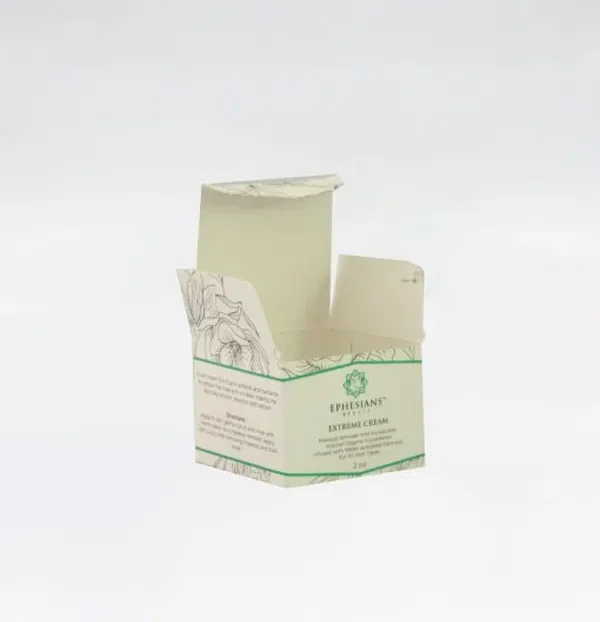


A lid, a base and nothing to assemble. Two piece rigid setup boxes are the classic structure for shoes, apparel, chocolates, games and gift sets, delivered ready to fill. Brands and retailers buy two piece rigid setup boxes from Boxify Now in custom sizes with full or shallow lids. Order custom printed two piece rigid setup boxes with your logo in CMYK, PMS, foil or embossing. Wholesale two piece rigid setup boxes come with free design support, a digital proof and low minimums. Buy now or request a quote.
Two piece rigid setup boxes are sturdy boxes made of a separate lid and base, each formed from thick chipboard and wrapped in printed or colored paper. They arrive already assembled, which is what “setup” means, and are used for shoes, apparel, electronics, confectionery, candles, games and gift sets. The lid slides down over the base, so the style is also known as a telescope box or a lid-and-base box.
It means the box is built at the factory and delivered in its finished shape. A folding carton is printed on thin paperboard, shipped flat and popped open by the packer. A setup box starts as heavy board that is scored, folded up, reinforced at the corners and then covered in a paper wrap that hides every join. It cannot be flattened afterward.
That construction gives the weight, square corners and solid feel people associate with premium products. It also means your packing team has no assembly to do. They lift the lid, place the product and close it.
Lid depth changes how the box looks, how it opens and how strong it is, so decide it early.
The lid covers the base completely. The side walls are double thickness when closed, which makes this the strongest version and the best for stacking. It gives one uninterrupted surface for artwork. Phone, watch and fragrance packaging often uses it.
The lid stops partway down and leaves a band of the base visible. Printing the base in a contrasting color turns that band into a design feature, and the exposed base gives a natural place to grip.
A lid of an inch or so sits on top like a cap. It opens quickly and suits wide, flat boxes for shirts, scarves, stationery and assorted chocolates, where the customer lifts the lid many times.
Tight enough to stay on when the box is carried, loose enough to open with two hands and no shaking. The clearance between lid and base is small, usually well under a millimeter per side, and it controls everything about the opening.
A close fit on a full lid traps air, so the base slides out slowly under its own weight. Many electronics brands want exactly that pause. The same fit on a heavy product can be frustrating, because the customer has to grip and pull. For those boxes, a slightly easier fit with thumb notches works better.
Paper and finish matter too. A thick textured wrap or a lamination film adds to the wall thickness, so the fit is set with the final materials in mind rather than the bare board. Tell us what experience you want, a slow reveal or a quick lift, and we set the tolerance accordingly.
They are used wherever a product needs protection, presentation and a box worth keeping. Footwear and apparel brands use shallow and partial lids for shoes, shirts and accessories. Electronics companies choose full lids with fitted inserts for phones, earbuds and smart devices.
Board game and puzzle publishers have relied on this structure for generations because it stacks, survives years of opening and prints well on every side, which is why it remains the usual build for custom game boxes. Confectioners use shallow rigid boxes with divider trays for assortments, in the same family as our chocolate boxes. Candle makers, stationers and corporate gift companies round out the list.
Start with the product and work outward. The inside of the base is the dimension that matters, and the lid is calculated from it.
If the box has to fit a retail shelf, a shipper or a gift bag, give us that outer limit as well. Board thickness adds to every side, so a box with a three-inch interior is noticeably larger outside.
Rigid chipboard comes in a range of thicknesses. Small jewelry and cosmetics boxes use lighter board. Shoe boxes, game boxes and large gift sets need heavier board so the base does not flex. We recommend a grade once we know the size and the weight inside.
The wrap can be art paper printed in CMYK or PMS, a dyed specialty paper, or kraft. Finishes include matte or gloss lamination, soft-touch, aqueous coating, spot UV, foil stamping, embossing and debossing. The lid top is the main panel, but remember the base. On partial and shallow lids the base walls are always on show and should be printed or colored to match. The inside of the lid can be printed as well, a good place for a message the customer sees on opening.
Printed two piece rigid setup boxes do not ship flat, and that is the one practical cost of the style. They arrive in cartons with lids fitted, ready to use, and they take up their full volume in your stockroom. Plan delivery quantities around the space you have. If storage is tight, collapsible rigid boxes give a similar look and fold down between uses.
For online orders, treat the setup box as the gift and protect it. Wrapped corners dent under carrier handling, so pack each one inside an outer carton with a little paper fill. Plain or printed corrugated shipping boxes sized just larger than the rigid box do the job.
Boxify Now offers free design support, charges nothing for dies or plates, and sends a digital proof and 3D mockup for approval before production. Minimums are low and shipping is free. Your quote will confirm delivery details for your location and the timeline.
Custom two piece rigid setup boxes are the simplest way to give a product a lasting home. Buy now, or request a quote and we will help you settle the lid depth, fit and finish.
It is a box with a separate lid and base, both made from thick chipboard wrapped in paper and delivered fully assembled. The lid slides over the base. It is the traditional structure for shoes, games, apparel, chocolates, electronics and gift sets.
A folding carton is thin paperboard that ships flat and is folded by the packer. A setup box is heavy board formed and wrapped at the factory, so it is much stiffer, has clean wrapped edges and arrives ready to fill, but it cannot be flattened.
Three are common. A full lid covers the whole base, a partial lid leaves a band of base showing, and a shallow lid caps the top by about an inch. The right one depends on the product, the artwork and how often the box is opened.
Yes. That effect comes from a full-depth lid with a close fit, which lets air escape slowly as the base slides out. It works best on small to medium boxes. Tell us you want it so the tolerance is set for your chosen paper and finish.
Thickness is matched to the box size and the product weight. Small cosmetic and jewelry boxes use lighter rigid board, while shoe, game and large gift boxes need heavier grades. We recommend a specific board after reviewing your dimensions and what the box will carry.
Yes. Each part is wrapped separately, so the lid and base can be printed in different colors, papers or finishes. A contrasting base is especially effective with a partial lid, where the base shows as a band below the lid edge.
Thumb notches are semicircular cut-outs on opposite sides of the lid that expose the base so it can be gripped. They are useful on full-depth lids and heavy boxes. Shallow and partial lids rarely need them because the base is already accessible.
Card, foam and paperboard inserts, dividers and raised platforms are all made to the product. A fitted insert stops movement and frames the item. Send product measurements or a photo of the set so each cavity is cut to the correct size.
No. Rigid setup boxes are glued and wrapped into a fixed shape, so they are delivered assembled with lids on. They need more storage space than folding cartons. If that is a problem, a collapsible rigid structure is worth discussing when you request a quote.
Yes. The inside of the lid and the base lining can be printed in CMYK or PMS colors. Brands often use the inner lid for a short message, a pattern or care instructions that the customer sees when the box is opened.
Minimums are low, which helps new brands and limited editions. The quantity options available for your box depend on size, paper and finishing, and they appear on your quote along with pricing for larger runs so you can compare.
Setup boxes involve more handwork than folding cartons, and foil, embossing or fitted inserts add steps. Your timeline is confirmed on your quote. Share your launch date early so the schedule and delivery can be planned around it.
Yes. You receive a digital proof and a 3D mockup showing artwork on the lid and base, the lid depth and the logo position. Production begins only after you approve, and revisions at this stage are included in our free design support.
PDF, AI and EPS files at 300 DPI in CMYK. Supply logos as vector artwork for clean foil and embossing. We provide a dieline for the lid and base wraps, and our designers can place your artwork on it if you prefer.
Shipping is free, and your quote will confirm delivery details for your location. Because the boxes arrive assembled, the shipment is bulky for its weight. Mention any delivery constraints at your premises when you request the quote.