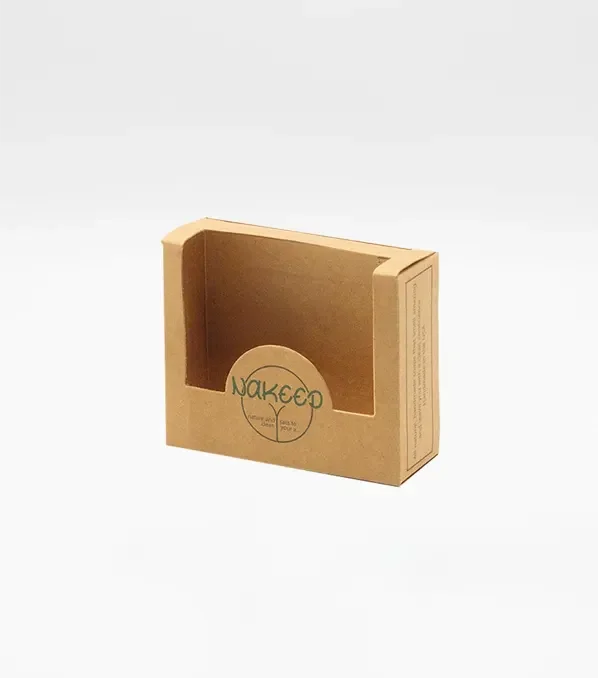
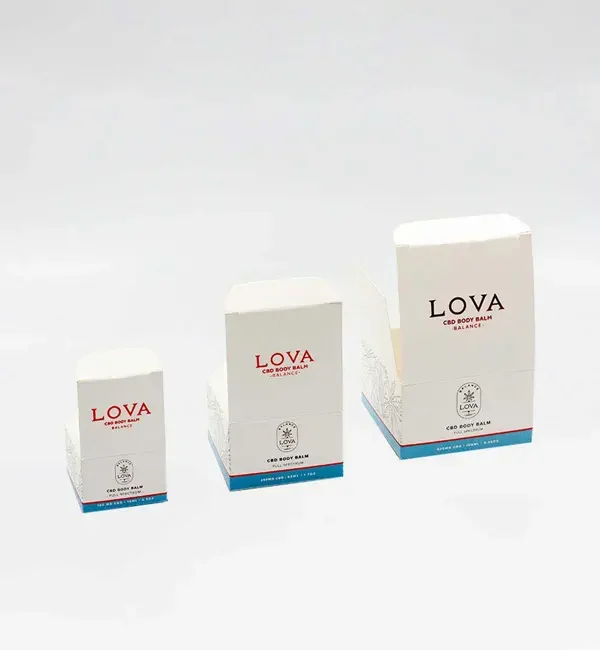


Buy tuck boxes from Boxify Now for cosmetics, supplements, playing cards, candles and small electronics. Our custom printed tuck boxes are cut to your exact dimensions in reverse tuck, straight tuck or auto-bottom styles and printed in CMYK or PMS with matte, gloss or soft-touch finishes. Order tuck boxes wholesale with low minimums and no die or plate charges, or get tuck boxes with logo artwork prepared by our free design team. Every carton ships flat to save space. Buy now or request a quote.
A tuck box is a folding carton cut from a single sheet of paperboard and closed by end flaps that tuck into the body of the box instead of being glued or taped shut. It ships flat, opens in seconds and recloses as often as the customer needs. Boxify Now produces custom tuck boxes in any size, with full-color printing and retail-ready finishes.
A tuck box is a type of folding carton, also called a tuck end box, tuck top box or tuck flap carton, and sometimes searched for as a tucker box.
A tuck box works by friction: four side panels are glued at one seam to form a sleeve, and each open end has two small dust flaps plus a larger closure panel with a tongue that slides inside the box wall. Push the tongue in and the end is closed; pull it out and the box opens without tearing. Optional slit locks cut into the tuck tongue catch on the dust flaps and stop the end from popping open in transit.
The difference is the direction in which the two ends close. On a reverse tuck end box the top and bottom flaps tuck in opposite directions; on a straight tuck end box both flaps tuck the same way.
The top closure hinges from the back panel and tucks toward the front, while the bottom closure hinges from the front and tucks toward the back. Reverse tuck end boxes nest tightly on the print sheet, which uses less board, and they are quick to fill by hand. They are the everyday choice for light products such as lip balm, tinctures, soap and card decks.
Both closures hinge from the back panel and tuck toward the front, so no raw cut edge shows on the front face. That clean front makes this style a good match for window cut-outs and premium shelf displays.
These keep a tuck flap on top but replace the bottom tuck with a stronger base. An auto-lock bottom is pre-glued and snaps into place when you open the box. A snap-lock bottom, also called a 1-2-3 bottom, is folded together by hand in three moves. Both carry more weight than a tuck end.
Choose the style by product weight, how the box will be displayed and how fast you need to pack it.
Custom tuck boxes are made from folding-carton paperboard, with the grade chosen for print quality, appearance and strength.
Paperboard thickness is measured in points, where one point is one thousandth of an inch. Lighter items sit comfortably in 14 pt or 16 pt board, 18 pt is a common all-round retail choice, and 24 pt gives a stiffer wall for heavier or more premium products.
Tuck boxes can be printed edge to edge on every panel, inside and out, in CMYK for photographic artwork or PMS inks for exact brand colors. After printing, a coating or lamination protects the ink and sets the feel of the box:
Die-cut windows, with or without clear film, let shoppers see the product itself. Custom paperboard inserts hold bottles, vials or devices upright and stop them rattling.
Tuck boxes are used for small to medium retail products that need a printed carton at a sensible unit cost. Typical examples include:
A tuck end box is measured on the inside as length by width by depth. Length and width describe the opening where the tuck flap closes: length is the longer side of that opening and width is the shorter. Depth is the distance between the two tuck ends.
Measure your product at its widest points, then add roughly 1/16 to 1/8 inch of clearance to each dimension so it slides in without force. If you are unsure, send us the product measurements and we will size the carton for you.
When you buy tuck boxes from Boxify Now, the price you are quoted covers the box itself, not a stack of setup fees. You get:
Cartons arrive flat and pre-glued, so they take up little storage space and each one pops open when you are ready to pack.
Whether you need one tuck box style for a single product or a matching family of cartons for a whole range, Boxify Now will build it to size. Request a quote today or buy now to get started.
Compare other box styles: straight tuck end boxes, folding boxes, custom retail boxes, and corrugated roller boxes.
A tuck box is a paperboard folding carton with end flaps that tuck inside the box to close it. It needs no glue or tape at the packing stage, ships flat, and can be opened and reclosed repeatedly without damage.
On a reverse tuck end box the top and bottom flaps close in opposite directions. On a straight tuck end box both close the same way, leaving a cleaner front face. Reverse tuck uses slightly less board; straight tuck suits windows.
A standard tuck end is designed for light products. For glass bottles, jars and candles we recommend a tuck top box with an auto-lock or snap-lock bottom, a thicker board, and an insert to hold the item steady.
It is a carton with a tuck flap on top and a pre-glued base that locks itself into place as soon as the box is opened. It saves assembly time and supports more weight than a tuck flap base.
Any size. Because there are no die charges, we cut each order to your exact inside length, width and depth. Share the product measurements and we will add the right clearance for a snug, easy-loading fit.
Light items usually suit 14 pt or 16 pt paperboard, general retail products 18 pt, and heavier or premium products 24 pt. For shipping strength, E-flute corrugated is an option. We will recommend a thickness on your quote.
Yes. We can die-cut a window in any shape on any panel and leave it open or cover it with clear film. Straight tuck end boxes are a popular base for windows because the front face has no visible cut edges.
Yes. Inside printing is available in CMYK or PMS, either as a full pattern or a single message on the inner flap. It is a low-cost way to add instructions, a brand story or a social media prompt.
Yes. They are glued along the side seam and delivered flat, which keeps freight and storage needs small. To use one, squeeze it open, fold in the dust flaps, close one end, insert the product and tuck the other end.
We offer low minimums so you can order what you can realistically use. The exact minimum depends on size, board and print method, and your quote will list it together with price breaks for larger quantities.
Unit cost depends on dimensions, board grade, print coverage, finishes and quantity, and it falls as quantity rises. There are no die or plate charges. Send your specifications and we will return a clear quote.
Yes. Many customers order a family of cartons in different sizes with shared branding. Tell us each product size and quantity, and we will quote them together and keep colors consistent across the full range.
Supply a PDF, AI or EPS file at 300 DPI in CMYK, laid out on the dieline we provide, with fonts outlined and images embedded. If you need help, our design support is free of charge.
Yes. We send a digital proof on the flat dieline and a 3D mockup of the assembled carton. Production starts only after you approve them, so you can check copy, barcodes, colors and panel orientation first.
The timeline depends on quantity, finishes and your location, so it is confirmed on your quote rather than promised up front. Shipping is free, and your quote will confirm delivery details for your location.