
Toy packaging has two audiences: the child who spots it from across the aisle and the adult who reads the back before paying. Toy boxes are retail cartons for action figures, dolls, puzzles, plush, building sets and games, made to show the toy and survive eager hands. Toy makers, importers and gift shops buy toy boxes with windows, hang tabs or open fronts. We produce custom printed toy boxes in CMYK or PMS colors, with your logo on every panel. Ask about toy boxes wholesale for full product lines. Buy now or request a quote.
Toy boxes are printed retail cartons that package toys for sale, protecting the product in transit and showing it clearly on a shelf or peg. Toy manufacturers, importers, independent makers and gift retailers use them for everything from pocket-size collectibles to large playsets. This page is about packaging for selling toys, not the storage chests that are also called toy boxes.
It has to win attention from a child and trust from an adult in a few seconds. Children respond to color, characters and being able to see the actual toy. Parents and gift buyers look for the age range, what is included, whether batteries are needed and how big the toy really is.
The box also takes more punishment than most retail packaging. It is picked up, shaken, squeezed and put back many times before it is bought, and it needs to look fresh afterward. Structure, board weight and a protective finish matter as much as the artwork.
The product usually points to the structure:
If your range includes tabletop titles, our game boxes page goes further into rigid lid-and-base construction and component trays.
Choose by how much the toy sells itself on sight and how much protection it needs.
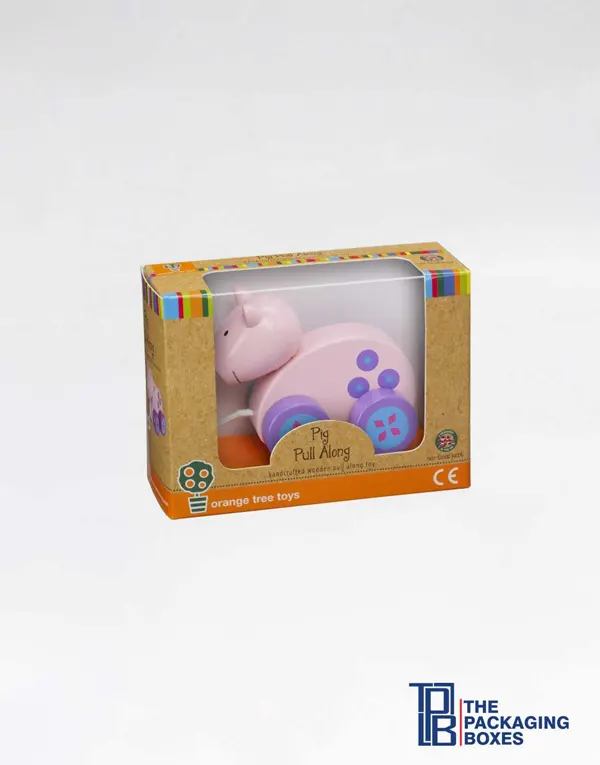
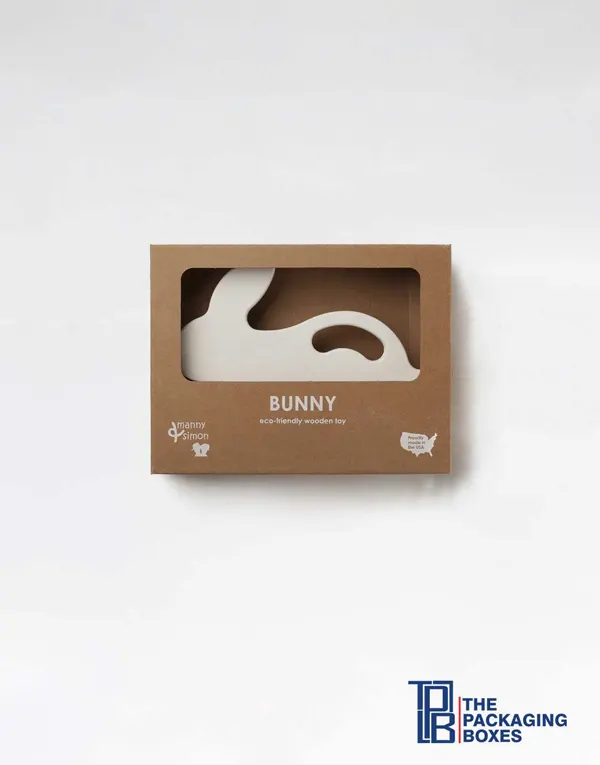
A die-cut window covered with clear PET film shows the real product while keeping it clean and secure. It is the standard for figures, dolls and die-cast vehicles. Windows can wrap around a corner to show the toy from two sides, and the surrounding panel carries the branding. See our window boxes for shapes and film options.
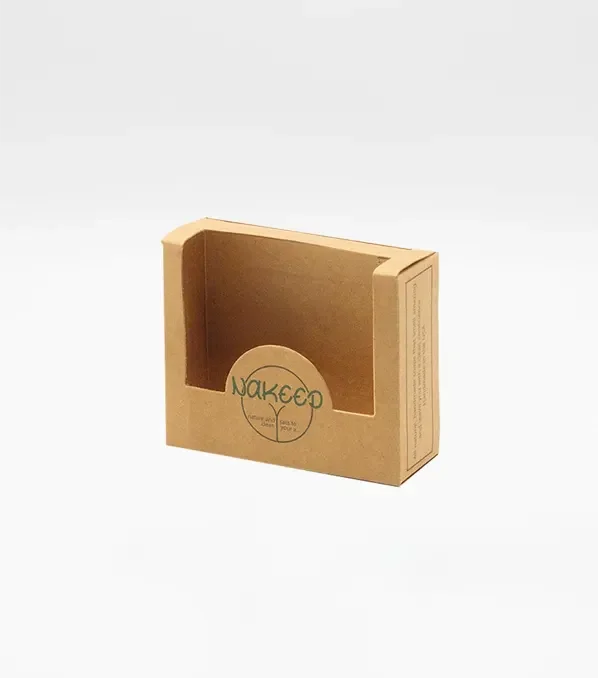
Leaving the front open, or adding a cut-out over a button, lets shoppers feel a plush toy or press a sound feature. These packs sell well but need a firm insert and ties, since nothing covers the product.
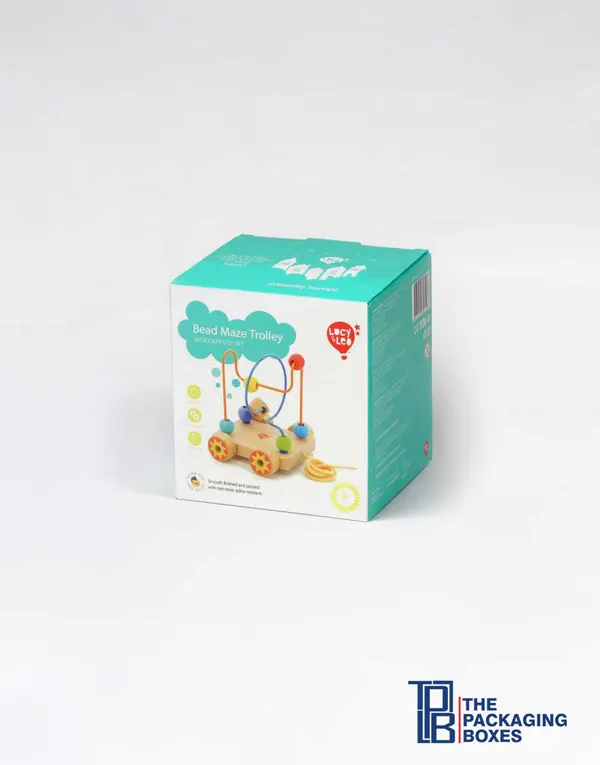
A fully printed box suits puzzles, kits, building sets and surprise items. Here the photography does the work, so show the toy at a believable scale and include an image of everything in the box.
Match the board to the weight and the journey. SBS paperboard is the usual choice for light and mid-weight toys, because it carries saturated color and fine detail. Heavier paperboard grades add stiffness for larger window cartons, where the opening removes some of the panel’s strength.
E-flute corrugated board, printed directly or faced with a printed sheet, suits heavier toys and anything sold online, since it resists crushing without looking like a shipping carton. B-flute is the step up for bulky playsets and ride-ons. Rigid chipboard is used for games, premium wooden toys and collector editions that are meant to be stored in their box. Kraft board fits natural, craft and educational brands.
A toy should stay exactly where the designer placed it, from the factory to the checkout. Die-cut paperboard inserts with tabs and slots are the most common solution, and many brands now use them with paper ties in place of wire. A printed backing card inside a window carton doubles as scenery behind a figure. Formed trays hold multiple parts, and dividers separate pieces in a set so nothing scratches.
For kits with many small components, plan the insert so each part is visible or clearly accounted for, and so the box can be repacked easily at home.
Buyers and retailers expect a consistent set of details, and most of it sits on the back or base:
You are responsible for making sure the warnings, age grading and labeling on your packaging meet the rules where you sell. We print the content you approve, and the proof stage is the time to check it line by line.
Toy packaging is one of the few places where more color is usually better. CMYK printing reproduces character art and photography, and PMS inks keep a brand or licensed color consistent across a whole line. Printing inside the box can turn the interior into a backdrop or a play scene.
Gloss lamination is the most popular finish because it makes colors vivid and wipes clean. Matte and soft-touch finishes suit wooden, heirloom and design-led toys. Spot UV can make a character or logo shine against a matte panel, foil stamping adds sparkle to collector editions, and embossing gives a title some depth.
Measure the toy in the pose and position it will be packed in, including accessories, then add room for the insert. A little empty space around a figure looks deliberate; too much makes the toy seem small and wastes shelf room.
Retail fixtures matter too. If the box hangs on a peg, keep it light and add a reinforced tab like those on our hanging tab boxes. If it stands on a shelf, check the depth and height your retailers allow. Small impulse toys often sell best from a printed tray near the register, which is where display boxes come in.
We build custom toy boxes around your product, in the size, board and style it needs, with custom inserts and dividers where they help. Design support is free, there are no die or plate charges, and low minimums make it practical to test a new toy or run a seasonal edition. Every order includes a digital proof and a 3D mockup before production, and boxes ship flat where the style allows. Shipping is free; your quote will confirm delivery details for your location.
To order, send the toy’s dimensions and weight, the style you have in mind, the quantity and your artwork as PDF, AI or EPS at 300 DPI in CMYK. We will confirm the timeline on your quote and prepare the proof for approval.
Share your product details with us and request a quote for printed toy boxes that show the toy at its best and hold up to handling.
Most are SBS paperboard, which prints bright color well. Corrugated board in E-flute or B-flute is used for heavier or mail-order toys, rigid chipboard for games and collector editions, and kraft board for natural and educational toy brands.
Yes. Windows are die-cut to any shape and covered with clear PET film so the toy is visible but protected. They can sit on the front panel or wrap around a corner to show the product from two sides.
It is a pack with an opening that lets shoppers press a button or touch part of the toy in store. The cut-out is positioned over the feature, and the toy is fixed firmly to an insert so it stays in place.
Die-cut paperboard inserts with slots, tabs and paper ties hold the toy and its accessories in position. Backing cards, formed trays and dividers are also available, and each is designed around your product’s exact shape and weight.
Yes. A reinforced hang tab with a round or euro hole can be built into the carton. Let us know the packed weight and your retailers’ peg dimensions so the tab is sized and strengthened correctly.
We print the warnings, age range and markings included in your approved artwork. You are responsible for confirming that the labeling meets the requirements where the toy is sold, so check those details carefully on the proof.
Base it on the toy as it will be packed, with accessories and insert included, plus a small margin. Also consider shelf depth and peg limits at your retailers. Send us the product dimensions and we can suggest a size.
Gloss lamination is the most common because it boosts color and resists fingerprints and scuffs. Matte or soft-touch works for wooden and premium toys, and spot UV, foil stamping or embossing can highlight a logo or character.
PMS spot inks are available for colors that must be exact, and they can be combined with CMYK artwork. Provide the color references from your style guide, and review them on the proof before approving production.
Corrugated toy boxes can be designed to ship on their own, usually in E-flute or B-flute board. Paperboard retail cartons are intended for shelves and should be packed in an outer shipper for transit and online orders.
Yes. Two-piece lid-and-base boxes in paperboard or rigid chipboard are standard for puzzles and games, since they are opened repeatedly. Inserts or trays can be added to organize pieces, cards and other components.
Minimums are low, so independent toy makers and small importers can order printed packaging for a first run. The available quantities vary with style and board, and they are listed on your quote.
The timeline is confirmed on your quote and depends on the structure, window, inserts, finishes and quantity. If you are working toward a holiday season or trade fair, tell us the date when you first contact us.
Yes. A digital proof and a 3D mockup are provided for every order. Check the artwork, window position, barcode, age range and warnings carefully, because printing does not start until you approve the proof.
Send PDF, AI or EPS files at 300 DPI in CMYK, placed on the dieline we supply. If your artwork is not print-ready, our design team can help set it up on the template at no cost.