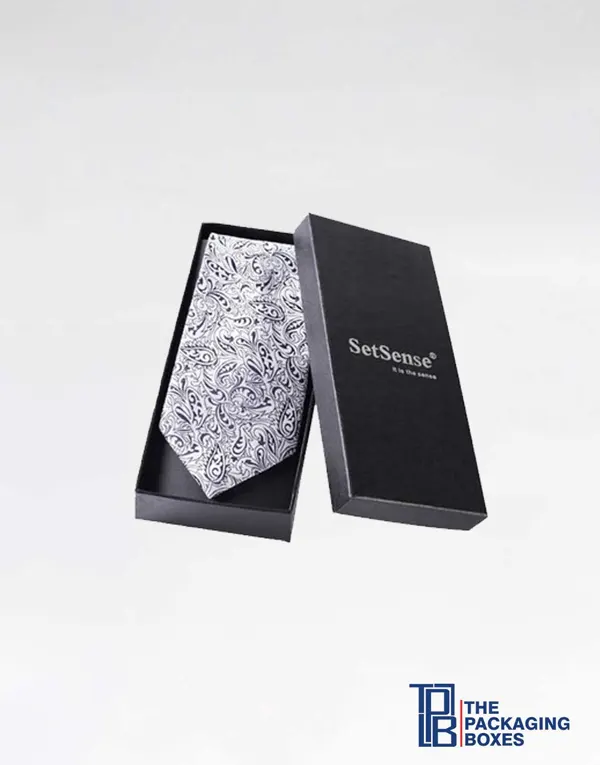
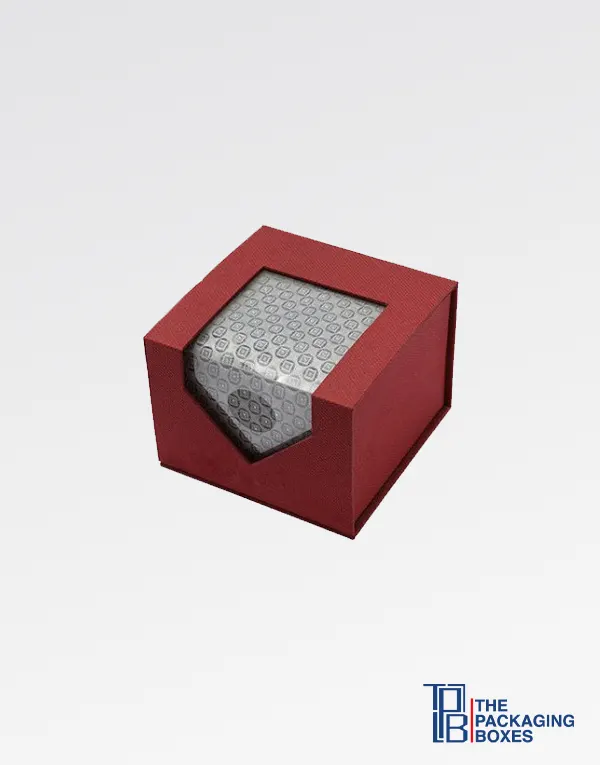
A tie is nearly always bought as a gift, so the box does much of the selling. Tie boxes hold neckties, bow ties and skinny ties flat, folded or rolled, and keep silk free of creases. Menswear stores, tailors, uniform suppliers and wedding retailers buy tie boxes for single ties and sets. Choose custom printed tie boxes with a window, a lift-off lid or a magnetic flap. For store chains and seasonal gifting we supply tie boxes wholesale. Add foil or embossing and finish tie boxes with your logo. Buy now or request a quote.
Tie boxes are slim cartons or rigid boxes made to store, present and gift neckties, bow ties and similar neckwear without creasing the fabric. Menswear brands, department stores, tailors and gift retailers use them at the counter and for online orders, often with a window so the pattern and color can be seen.
Decide how the tie is presented before anything else, because that single choice sets the shape of the box.
The tie is folded in half and then in half again, and it lies in a long, narrow box with the blade on top. This is the traditional department store presentation. It shows the widest part of the pattern, keeps the folds soft and leaves room for a card band that holds the tie in position.
The tie is folded into a compact rectangle and sits in a shorter, squarer box, sometimes over a shaped card insert. It suits gift sets and saves shelf space, though it puts more folds in the fabric.
The tie is rolled from the narrow end and placed in a square or cube box, blade outward. Rolling avoids hard creases, which makes it a favorite for silk and knitted ties and for brands that ship directly to customers. A rolled tie needs a deeper box than a folded one.
Measure your own tie in the fold you plan to use, since blade widths vary from skinny to wide. These dimensions are common starting points:
Allow a little clearance around the widest point of the blade so the edges are not pinched, and check the depth with the tie’s lining and keeper loop included. Boxes are made to your measurements, so a wide seven-fold tie and a slim knitted tie can each have a box that fits.
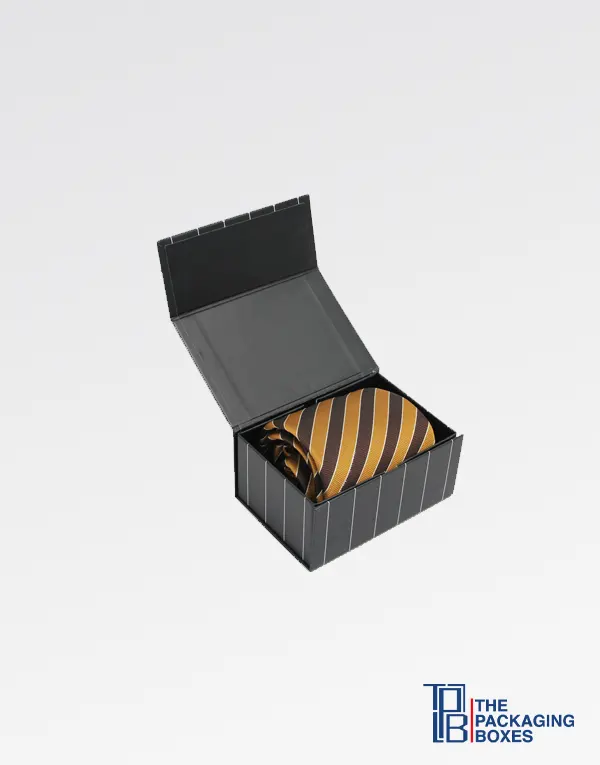
Most tie packaging falls into four styles. A two-piece box with a lift-off lid is the classic choice and works in paperboard or rigid board. A tuck-end carton is the economical option for volume retail and uniform programs, and it ships flat. A sleeve and tray, where a printed sleeve slides off a drawer holding the tie, gives a neat reveal for gift lines. A magnetic flap box in rigid board is the premium choice for silk ties and boxed sets.
Hang-tab cartons are also used where ties are displayed on pegs, particularly for clip-on and children’s ties.
Yes, in most retail settings, because shoppers choose a tie by its color and pattern. A window cut into the lid lets the customer see the blade without opening the box and handling the fabric. It can be covered with clear PET film to keep dust off or left open on rigid styles.
A long oval or rectangle along the lid suits a tie folded long, while a square window suits rolled and bow ties. Keep at least a finger’s width of board around the opening so the lid stays firm. If your range is sold mainly online or as wrapped gifts, a solid lid with a strong logo may serve you better.
SBS paperboard is the standard for retail tie boxes: it is smooth, bright and prints fine patterns and small type cleanly. Kraft board gives a warmer, casual feel that suits wool, linen and knitted ties. E-flute corrugated board is worth considering for mail-order boxes that travel without an outer carton.
For designer neckwear and gifts meant to impress, rigid chipboard wrapped in printed or textured paper feels substantial and protects the tie for years of storage. You can see those constructions on our luxury tie boxes page.
An insert or band does, and it also improves the presentation. The simplest holder is a paperboard band or a pair of die-cut slots that the folded tie slides through. A shaped card platform lifts the blade toward the window. For rolled ties, a snug cube or a card collar stops the roll from loosening. Bow tie boxes often use a card with two notches that grip the center knot.
Rigid boxes can carry a foam or card insert covered in paper or fabric-look material, with cut-outs for a tie, a clip and a pocket square.
Sets are where neckwear packaging earns its margin. A tie paired with a pocket square, tie bar or pair of cufflinks sells as one gift, and a divided box keeps each piece visible. When the accessories have their own packaging, order them in the same paper, color and finish; matching cufflink boxes alongside your tie boxes make a coordinated groomsman or Father’s Day set.
The same approach works with larger garments. Retailers who sell a shirt and tie together often place the tie box inside or beside one of our shirt boxes printed in the same design.
Restraint tends to work best. Deep navy, charcoal, burgundy, forest green and black are the usual base colors, printed in PMS inks when the shade has to match existing store packaging. CMYK is available for patterned or photographic designs, and the inside of the box can be printed too.
Demand follows the gifting calendar. Father’s Day and the winter holidays are the peaks, with graduation, prom and wedding seasons close behind. Wedding retailers and formalwear rental shops box ties for groomsmen, sometimes with names or dates printed on the lid. Schools, clubs, airlines and hospitality groups order uniform ties in plain branded cartons throughout the year. Planning the order well ahead of a seasonal peak gives you time to review the proof properly.
Send us the tie measurements, the fold or roll you prefer, the box style and your quantity, along with artwork as PDF, AI or EPS at 300 DPI in CMYK. If you need help with the layout, design support is free, and there are no die or plate charges. You will receive a digital proof and a 3D mockup before production, with the timeline confirmed on your quote. Minimums are low, folding styles ship flat, and shipping is free; your quote will confirm delivery details for your location.
Tell us about your neckwear range and request a quote for custom tie boxes that present every tie the way it deserves.
A necktie folded long usually fits a box about 14 to 15 inches long, 4 to 4.5 inches wide and 1 inch deep. Rolled ties need a cube of roughly 4 inches, and bow ties fit a box near 5 x 3 inches.
Rolling avoids sharp creases and suits silk and knitted ties, especially for shipping. Folding long shows more of the pattern and is the traditional retail display. Both work well when the box is sized correctly for the tie.
SBS paperboard and kraft board are used for folding styles, E-flute corrugated for mail-order boxes and rigid chipboard for premium gift packaging. The choice depends on your price point, how the tie is sold and how long the box should last.
Yes. A die-cut window in the lid can be any shape and is usually covered with clear PET film to keep the fabric clean. Long windows suit ties folded lengthwise, and square windows suit rolled ties and bow ties.
Yes. Bow tie boxes are shorter and a little deeper than necktie boxes, and they often include a notched card insert that grips the center knot. Pre-tied and self-tie bow ties may need different depths, so send measurements.
Yes. A divided insert or a wider two-compartment box presents a tie beside a pocket square, tie bar or cufflinks. Tell us every item in the set and its size so the compartments can be cut to fit.
A paperboard band, a pair of slots or a shaped card platform holds a folded tie in position. Rolled ties sit in a snug cube or card collar. Rigid boxes can use paper-covered foam or card with cut-outs.
Menswear packaging often uses matte or soft-touch lamination in dark colors with a foil-stamped or embossed logo. Spot UV can highlight a pattern, and gloss lamination is available for brighter, more casual or novelty neckwear ranges.
We print the artwork you supply and approve, so a lid design with a wedding date, monogram or role such as “Groomsman” is possible. Each different design is treated as its own version, so mention any variations when requesting a quote.
Paperboard tuck-end cartons, folding two-piece boxes and sleeves ship flat and are quick to assemble in store. Rigid tie boxes, including magnetic flap styles, are delivered assembled unless a collapsible rigid construction is specified for your order.
Minimums are low, which suits independent menswear shops, tailors and wedding retailers as well as larger chains. Your quote will set out the quantities offered for the style, board and finishes you select.
Production time depends on the box construction, finishes and quantity, and your timeline is confirmed on your quote. For Father’s Day, holiday or wedding season orders, contact us early so there is time for proofing and delivery.
Yes. We send a digital proof and a 3D mockup showing the artwork, window position and insert before anything is printed. You can request corrections at that stage, and production begins only after your approval.
Artwork should be supplied as PDF, AI or EPS at 300 DPI in CMYK, with logos in vector form where possible. If you need a layout created from a logo and brand colors, our designers will help free of charge.
Paper-based packaging is widely recyclable. Plain paperboard and kraft boxes are the easiest to recycle, while window film, laminations, magnets and foam inserts may need to be separated. Local rules vary, so check the guidance in your area.