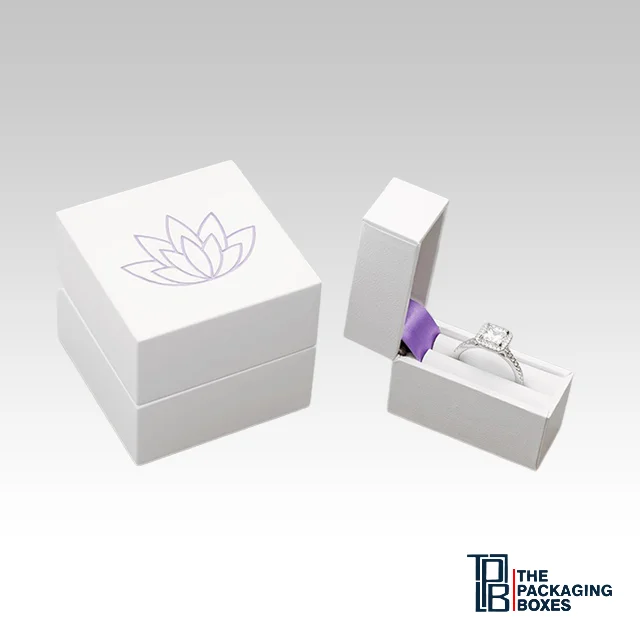

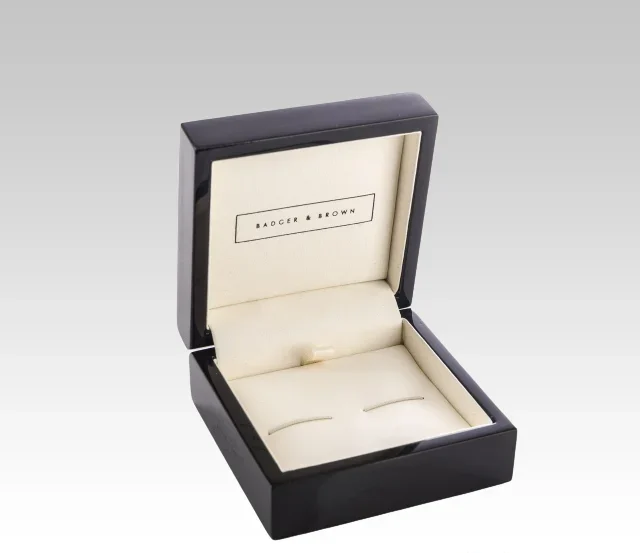


Cufflinks are small, sold in pairs and usually given as gifts, so the box is part of the product. Cufflink boxes from Boxify Now hold each pair upright on a slotted pad inside a hinged, lift-off or drawer box. Menswear retailers, jewelers and gift suppliers buy cufflink boxes in rigid board or paperboard, for a single pair or a set with a tie bar. Order custom printed cufflink boxes with your logo on the lid. Cufflink boxes wholesale orders include free design support, a digital proof and low minimums. Buy now or request a quote.
Cufflink boxes are small presentation boxes with a fitted insert that holds a pair of cufflinks side by side, faces up, so they can be displayed, gifted and stored without scratching each other. Most are made from rigid board wrapped in paper, with a hinged or lift-off lid and a padded or foam base. They are used by menswear stores, jewelers, tailors and gift companies, and by anyone selling cufflinks as part of a formalwear set.
Mostly businesses that sell to gift buyers. Few people buy cufflinks on impulse for themselves. They are bought for weddings, graduations, promotions, anniversaries and Father’s Day, and the buyer wants the pair to look finished when it is handed over.
Menswear retailers and department store brands need a consistent house box. Independent cufflink designers want packaging that makes a small maker look established. Tailors and made-to-measure shirt makers add a boxed pair to a suit order. Wedding suppliers sell groomsmen sets, and promotional companies supply logo cufflinks to corporate clients in volume. Stores that carry timepieces as well often order their cufflink packaging in the same wrap and foil as their custom watch boxes.
By the post, not the face. The decorative front has to stay visible and untouched, so the insert grips the stem and backing behind it. There are three common ways to do that.
A padded card or foam panel covered in a soft material has two short slits. The toggle is turned in line with the post, pushed through the slit and turned back, which locks the cufflink flat against the pad. It is the classic method and it fits most swivel-back styles.
A foam block has two cavities cut to the depth of the post, and the face rests on the surface. This holds fixed-back, ball-return and chain-link cufflinks, which have no toggle to turn, and it copes with unusually thick backs.
A paperboard platform with two punched holes or slots is the economical option for folding boxes. It works for promotional and fashion pairs and ships flat with the box.
Tell us which back style you sell. A slit sized for a slim toggle will not take a chunky fixed back, and a cavity cut too wide lets the pair tilt.
Depth is the dimension buyers most often get wrong. A cufflink stands close to an inch tall from face to toggle, and the lid has to clear the face without pressing on it. Measure the tallest pair in your range from the back of the toggle to the top of the face, then add the thickness of the pad.
A hinged lid suits most cufflinks because the box opens with one hand and presents the pair at an angle, much like a ring box. The lid stays attached, so it cannot be lost in a dresser drawer.
A lift-off lid is simpler and slightly less costly to build. It stacks neatly behind a counter and gives a clean, square look that many modern menswear brands prefer.
A drawer box slides open with a ribbon or thumb notch. It takes longer to open, which adds a sense of occasion, and the outer sleeve offers four sides for printing. For lower-priced and promotional pairs, a paperboard tuck box with a card insert does the job and ships flat.
Sets sell at a higher price than single pairs, and the insert is what makes them look like a set. A tie bar needs a straight channel or two elastic loops, and it should sit parallel to the box edge. Shirt studs need small individual slits in a row. Collar stays lie flat in a shallow recess.
Lay the pieces out the way you want the customer to see them and measure the whole arrangement. Retailers who sell neckwear alongside accessories sometimes go further and pack a tie with its matching cufflinks in one of our luxury tie boxes fitted with a divided insert.
Rigid chipboard is the standard for custom cufflink boxes, since the box will likely be kept on a dresser for years. The wrap sets the tone. Leather-grain and linen-texture papers suit traditional tailoring. Smooth matte black, navy and charcoal suit contemporary brands. Kraft works for handmade and wooden cufflinks.
Inside, the pad covering should be soft and should contrast with the metal. Black shows off silver, steel and mother-of-pearl. Cream or tan flatters gold and enamel colors. SBS paperboard is a sound choice when you need a lighter box for giveaways or subscription accessories.
Keep it simple and let the finish carry it. A cufflink box lid is only a couple of inches across, so there is room for a wordmark or a monogram and little else.
Matte or soft-touch lamination on the wrap gives foil a strong contrast. Spot UV is an alternative when you want a tone-on-tone pattern.
Printed cufflink boxes for events are usually ordered as one design in a single run. For a wedding party, that might be a monogram and date on the lid. For a company, it is the corporate mark and brand color, often as part of a wider order of business gift boxes.
If each recipient’s name needs to appear, add it with a tag, a sticker inside the lid or a printed card under the pad instead of printing every box differently. Another approach is a plain box with a printed outer band, the same idea as our sleeve boxes, so the event detail can change while the box stays in stock.
Minimums are low and shipping is free. Your quote will confirm delivery details for your location and the timeline for your order.
Good cufflink packaging makes a small item feel like a significant gift. Buy cufflink boxes now, or request a quote and tell us about the pairs you sell.
A box for a single pair is typically around two and a half inches square and about an inch and a half deep. Sets with a tie bar or studs are larger. All sizes are custom, so send the measurements of your tallest pair.
The insert grips the post and backing, leaving the face on show. On a slit pad, the toggle passes through a slit and turns to lock. On a foam insert, the back sits in a cut cavity. Both keep the pair from touching.
Yes, if it is specified for them. Fixed and chain-link backs cannot swivel through a narrow slit, so they need a die-cut foam cavity or a wider slot. Tell us the back style and its dimensions when you request your quote.
Yes. The insert is made with two positions for the cufflinks and a straight channel or loops for the tie bar. Shirt studs and collar stays can be added as well. Send the layout you want and the size of each piece.
Most are rigid chipboard wrapped in printed, textured or leather-grain paper, with a covered pad or foam insert. Paperboard and kraft folding boxes with card inserts are used for promotional and lower-priced pairs. We suggest a material to match your price point.
A hinged-lid rigid box is the favorite because it opens in one motion and presents the pair at an angle. Lift-off lids look clean and modern. Drawer boxes add a slower reveal. All three can carry the same wrap, logo and insert.
Foil holds good detail, but very fine lines and tiny text can fill in on a lid this size. A simple wordmark or monogram around an inch wide reads best. Our design team checks line weights and advises before the proof is finalized.
Yes. The inner lid can be printed in CMYK or PMS, or foil stamped. It is a good place for a second logo, a web address or a short message, since the customer sees it each time the box is opened.
Printing a unique name on every box requires separate runs, so most customers order one design and add names with a tag, card or sticker. That keeps the order simple and lets you make last-minute changes to the wedding party.
The pad or foam covering can be specified in a range of colors. Black is the most popular because it suits silver-tone metals. Cream, tan, navy and burgundy are common alternatives. Choose a shade that contrasts with the cufflinks you sell.
Minimums are low, so independent designers and wedding suppliers can order alongside larger retailers. The exact quantity options depend on the box structure and insert. They are set out on your quote with pricing for different run sizes.
Rigid boxes with covered inserts and foil take longer to make than simple folding boxes. The timeline for your specification is confirmed on your quote. If the boxes are for a wedding or a seasonal promotion, give us the date at the start.
Yes. You receive a digital proof and a 3D mockup showing the lid artwork, the logo size and the box structure. Nothing is produced until you approve it, and any adjustments are covered by our free design support.
PDF, AI or EPS files at 300 DPI in CMYK. A vector logo is strongly preferred for foil stamping, embossing and debossing on a small lid. If your file is not print-ready, our designers will help prepare it without charge.
Shipping is free, and your quote will confirm delivery details for your location. Paperboard tuck boxes ship flat where the style allows. Rigid hinged, lift-off and drawer boxes arrive assembled with inserts fitted, ready for you to add the cufflinks.