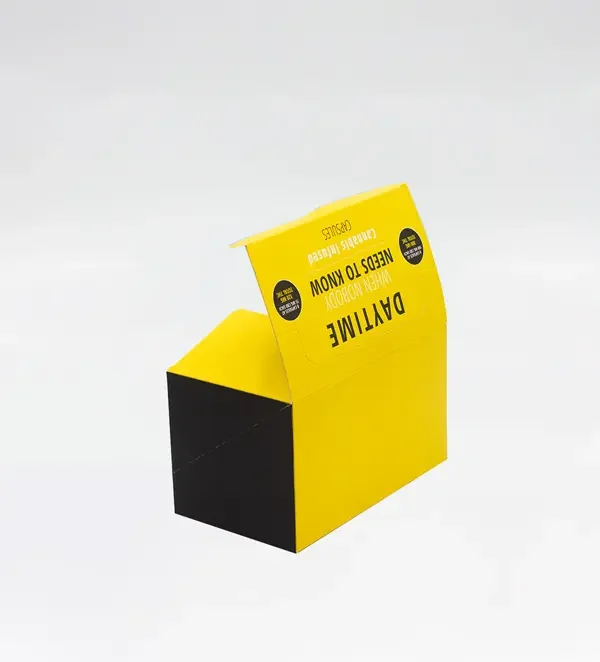
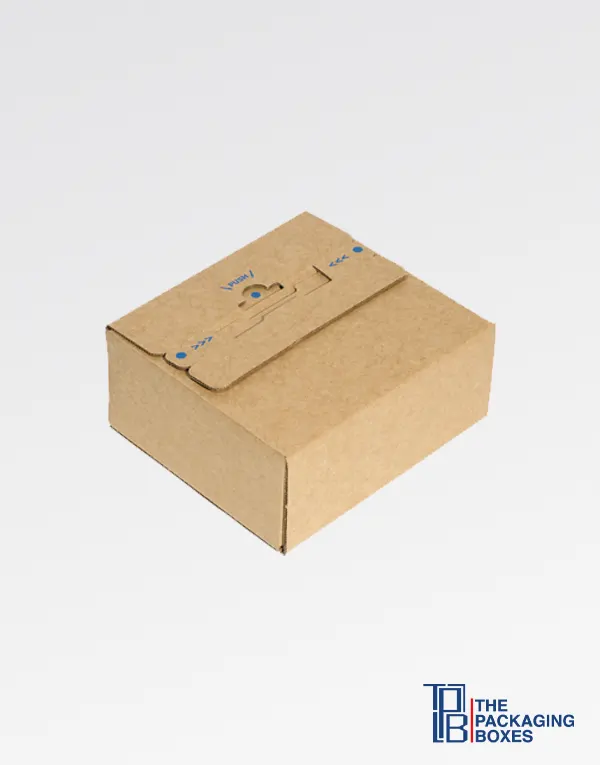
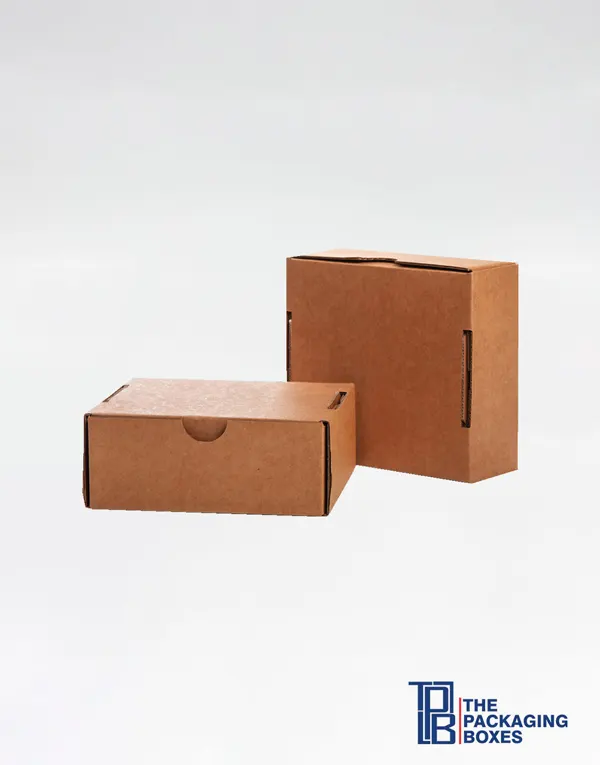
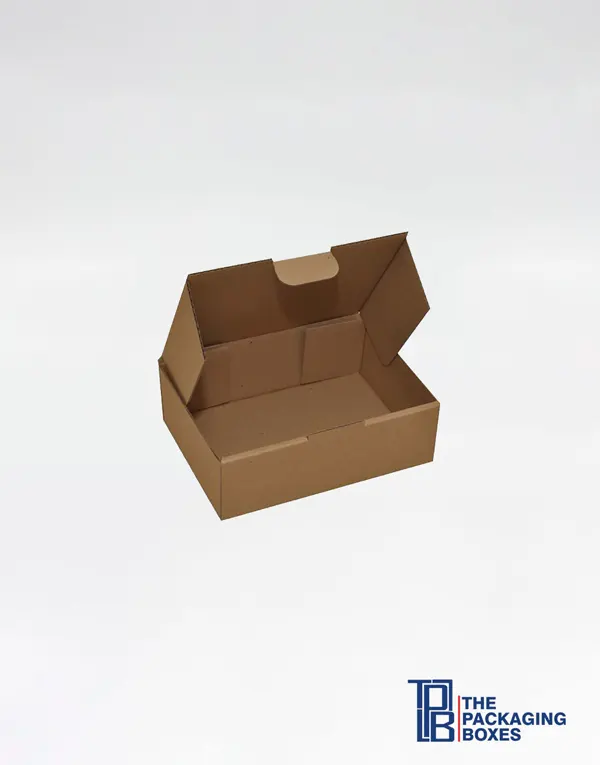
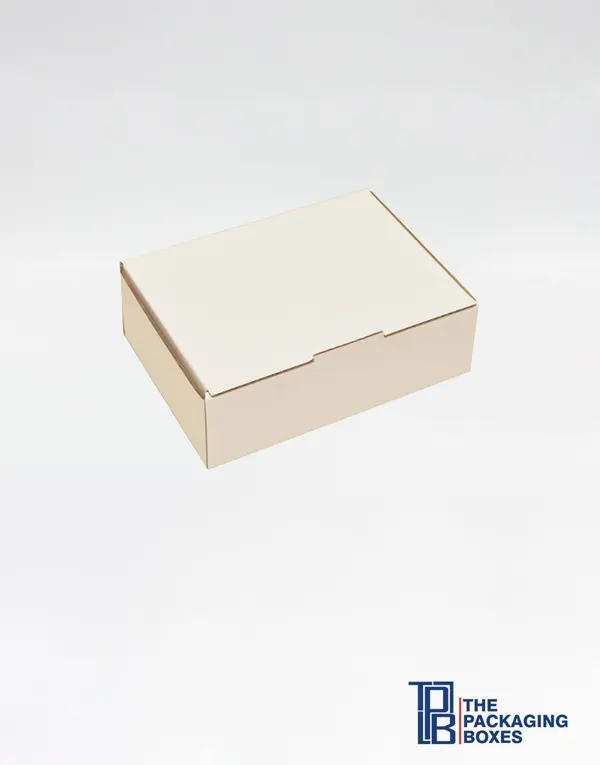
Postage boxes are corrugated boxes built to travel through the mail and arrive in one piece. Online stores, subscription brands and small businesses use them to send orders without paying for wasted space. When you buy postage boxes from Boxify Now, each one is cut to your product so it packs tight. We produce custom printed postage boxes in kraft or white board, printed outside and inside. Order postage boxes wholesale to supply a fulfillment desk, or start with postage boxes with your logo at low minimums. Buy now or request a quote.
Postage boxes are corrugated cardboard boxes designed for sending goods through postal and courier networks. They are light for their strength, sized to keep shipping charges down, and often printed so the parcel carries the sender’s brand from the doorstep onward.
A good postage box protects the contents, costs as little as possible to send and is quick to pack. Those three aims pull against each other. Heavier board protects better but adds weight; a roomy box is easy to pack but costs more to ship and needs filler.
The answer is nearly always a box made to the size of what you sell, in the lightest board that will survive the journey. A parcel is dropped, stacked, slid along conveyors and left on porches, so corners and closures need the most attention.
Corrugated board is a wavy paper layer, the flute, glued between flat liners, and the flute size sets the balance of strength, thickness and print quality.
Liners come in natural kraft or white. Kraft hides scuffs from transit; white makes printed color brighter.
A one-piece box with a hinged lid, side wings and a front tuck that locks without tape. It opens like a presentation box, which is why subscription and direct-to-consumer brands favor mailer boxes for the unboxing experience.
The familiar shipping box with four flaps top and bottom, sealed with tape. It is the most economical style for larger or heavier orders, and our corrugated shipping boxes page covers the options.
A scored sheet that folds around books, prints, frames or vinyl records and adjusts to different thicknesses.
For posters, tools, umbrellas and other narrow items that would otherwise ship in an oversized carton.
Box size affects postage because carriers price parcels on dimensions as well as weight. Most use dimensional weight, a figure calculated from length, width and height, and charge whichever is greater: the actual weight or the dimensional weight. A light product in a large box can therefore cost more to send than a heavy product in a small one. Carriers also set size thresholds above which surcharges apply.
Measure your product packed as it will ship, including any inner box, wrap or cushioning, and give us the internal length, width and depth you need. Then check the outside dimensions against your carrier’s current rate tables before you approve the dieline. Trimming even half an inch from one side can move a parcel into a cheaper band.
If you sell items in several sizes, two or three well-chosen box sizes usually serve better than one large box for everything. Very flat, soft goods such as T-shirts may travel well in paper mailer bags instead.
How the box closes affects packing speed and the customer’s experience. Self-locking mailers need no tape. A peel-and-seal adhesive strip closes the box in one motion, and a tear strip gives the customer a clean way in without a knife. A second adhesive strip lets the same box be resealed for a return, which apparel and footwear sellers find useful.
For taped cartons, printed custom tapes add branding to a plain box and make it easier to see whether a parcel has been opened in transit.
If the product can move inside the box, it needs something to hold it. A custom corrugated insert, cut to the outline of the item, is faster to pack than loose fill and gives every customer the same tidy presentation. Dividers keep bottles and jars from knocking together. Paper void fill suits irregular or mixed orders where a fixed insert is not practical.
Run a quick test before you commit to a design. Pack a sample, seal it, shake it, then drop it from waist height onto each face and one corner. Open it and look for movement, crushed corners or scuffing, and adjust the board grade or the insert before ordering in volume.
A postage box is seen by the carrier, the neighbors and the customer, so decide what the outside should say. Some brands print boldly. Others keep the exterior plain, so the parcel does not advertise its contents, and save the artwork for the inside of the lid.
Boxify Now prints in CMYK and PMS on both faces. Simple one- or two-color designs look crisp on kraft. Full-color artwork is best on a white liner, with matte or gloss lamination or an aqueous coating to resist rubbing. Leave a clear, flat area for the shipping label, and keep important artwork away from where tape will run.
Printed postage boxes are ordered by online retailers, subscription services, marketplace sellers, makers shipping handmade goods, and offices that send samples, documents and spare parts. Any business that mails the same products repeatedly benefits from a box made for them. Sellers of fragile goods such as candles, ceramics and glass bottles gain the most, because a close fit and a proper insert do more to prevent breakage than extra padding in a box that is too big.
Send us the internal dimensions or the product details, the board you prefer, the quantity and your print ideas. Our quote confirms the timeline. Free design support is included and there are no die or plate charges. Artwork is accepted as PDF, AI or EPS at 300 DPI in CMYK. You approve a digital proof and a 3D mockup, then we produce the boxes and ship them flat. Shipping is free; your quote will confirm delivery details for your location.
Low minimums mean you can order custom postage boxes for a new store without overcommitting. Request a quote and start sending parcels that fit.
They are made from corrugated cardboard, which has a fluted paper layer between flat liners. E-flute and B-flute are the most common grades for mailing because they give good protection without adding much weight to the parcel.
Postage box is a general name for any box made for mailing. A mailer box is one specific style: a one-piece, self-locking box with a hinged lid. Regular slotted cartons, book wraps and long boxes are postage boxes as well.
Measure the product as it will be packed, including inner packaging and cushioning, and add only the clearance you need. Then compare the outside dimensions with your carrier’s rate tables, since a small reduction can lower the shipping charge.
E-flute is usually the best match for apparel, cosmetics, books and other light goods. It is thin, so it keeps parcel dimensions down, and its smooth surface prints well. Heavier or fragile items are safer in B-flute or double wall board.
Yes. Inside printing in CMYK or PMS is a popular way to brand the unboxing while keeping the exterior plain. A message, pattern or logo under the lid is the first thing a customer sees after opening.
It depends on the style. Self-locking mailer boxes close with tabs and need no tape, though some senders add a sticker or adhesive strip for security. Regular slotted cartons are sealed with tape along the top and bottom seams.
Tear strips and peel-and-seal adhesive strips are options on suitable styles. Tell us you want them when you request a quote, along with whether the box should be resealable for returns, and we will confirm what fits your design.
Corrugated board withstands normal parcel handling, and lamination or aqueous coating helps the print resist rubbing and light moisture. No paper box is waterproof, so add an inner bag for goods that must stay dry in bad weather.
Yes. They are delivered flat in bundles and folded into shape when needed. Flat delivery saves storage space, which matters for home-based sellers and for fulfillment desks holding several box sizes at once.
We offer low minimums, so a new online shop can order branded boxes without filling a storeroom. Send the quantity you expect to use over the coming months and we will prepare a quote.
Yes. Custom corrugated or paperboard inserts and dividers hold bottles, jars, electronics and gift sets in position. Provide the size and weight of each item, and the insert will be designed with the box and shown on your proof.
Supply PDF, AI or EPS files at 300 DPI in CMYK, laid out on the dieline we provide. Mark where the shipping label will go. If you only have a logo, our free design support can create the layout.
Yes. You receive a digital proof and a 3D mockup to check dimensions, logo position, print colors and inside artwork. Production starts only after you approve, so there is time to correct anything that looks off.
The timeline is confirmed on your quote and depends on size, quantity and print. Shipping is free, and your quote will confirm delivery details for your location. There are no die or plate charges on custom sizes.
Paper-based packaging is widely recyclable, and corrugated boxes are accepted by most curbside paper and cardboard collections. Local rules vary, so customers should check locally and remove tape or labels where their program asks for it.